



Brushing your teeth is one of the most routine parts of daily life. Morning and night, it’s a habit most of us don’t think twice about. But behind every squeeze of that familiar plastic tube lies an environmental issue that’s piling up—literally.
Every year, around 20 billion toothpaste tubes are thrown away globally. These tubes are often made from a combination of plastic and aluminum, making them nearly impossible to recycle in regular municipal systems. As a result, they end up in landfills, incinerators, or oceans, where they can take hundreds of years to decompose.
Thankfully, there’s an easy, accessible solution: eco-friendly toothpaste. By choosing toothpaste with natural ingredients and sustainable packaging, you can care for your teeth without harming the environment.
The Problem with Traditional Toothpaste
Conventional toothpaste does a good job cleaning your teeth, but it comes with a hefty environmental cost.
1. Wasteful Packaging
- Most toothpaste tubes are made of multi-layered materials that combine plastic, aluminum, and petroleum-based components.
- These tubes are not curbside recyclable, and the majority are landfilled or incinerated.
2. Harmful Ingredients
- Some toothpastes contain triclosan, sodium lauryl sulfate (SLS), microplastics, or artificial dyes.
- These chemicals can wash down the drain, enter water systems, and harm aquatic life.
- Over time, accumulation of these pollutants disrupts ecosystems and threatens biodiversity.
3. Carbon Footprint
- Manufacturing and transporting billions of plastic tubes contribute to greenhouse gas emissions, further fueling the climate crisis.
The Rise of Eco-Friendly Toothpaste
Eco-conscious consumers and sustainable brands have stepped up with alternatives that clean just as well—but are safer for the planet and your body.
What Makes Toothpaste “Eco-Friendly”?
- Sustainable Packaging
- Recyclable aluminum tubes or glass jars with metal lids
- Compostable pouches
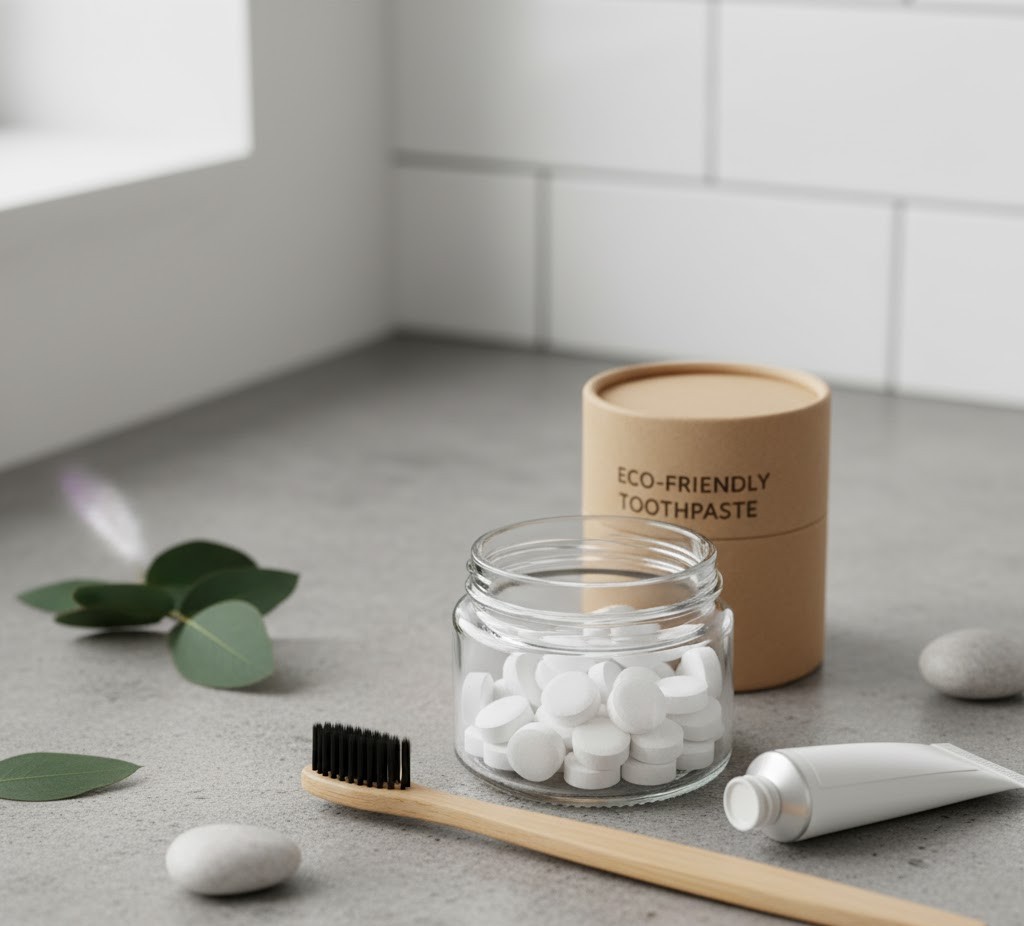
- Toothpaste tablets in refillable tins or paper tubes
- Clean Ingredients
- Natural ingredients like baking soda, coconut oil, charcoal, calcium carbonate, and essential oils
- Free from artificial preservatives, synthetic dyes, fluoride (optional), and harsh foaming agents like SLS
- Ethical Production
- Cruelty-free (not tested on animals)
- Vegan formulas
- Responsibly sourced ingredients
How Switching Helps
1. Reduces Plastic Waste
Replacing even one plastic tube every few months with a sustainable alternative prevents dozens of non-recyclable tubes from ending up in landfills over a lifetime.
2. Protects Waterways
Natural toothpaste avoids chemicals that enter our sewage and pollute rivers, lakes, and oceans.
3. Supports Circular Economy
By opting for recyclable or reusable containers, you support a zero-waste loop where packaging is returned, refilled, or broken down into safe materials.
4. Long-Term Savings
Many eco-friendly brands offer bulk refill systems or toothpaste tablets that last longer, reducing the frequency of repurchasing and shipping.
Popular Types of Eco-Friendly Toothpaste
Here’s a breakdown of the most common sustainable formats available today:
Toothpaste Tablets
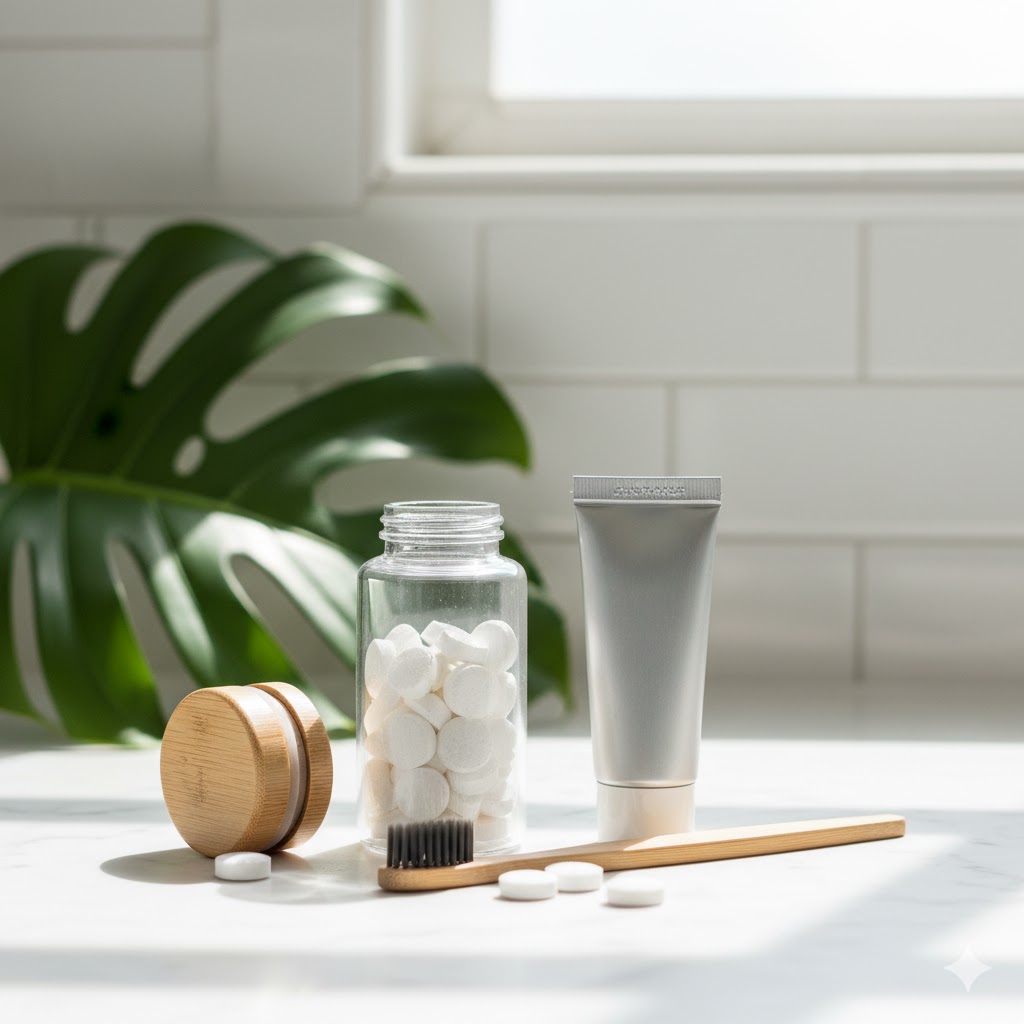
- Small, chewable tablets that foam in your mouth
- Come in reusable tins or compostable pouches
- Ideal for travel and low-waste lifestyles
Example brands: Bite, Huppy, Denttabs
Aluminum Tube Toothpaste
- Feels like a traditional paste but comes in recyclable metal tubes
- Requires a key to roll up for minimal waste
Example brands: Davids, Tom’s of Maine (aluminum line), Dr. Bronner’s
Glass Jar Toothpaste
- Paste or powder stored in reusable glass jars
- Often includes a mini scoop or you dip your toothbrush in
Example brands: Georganics, Nelson Naturals
What to Look For in an Eco-Friendly Toothpaste
When choosing a sustainable toothpaste, check for:
- Plastic-free or recyclable packaging
- Natural and non-toxic ingredients
- Cruelty-free and vegan certifications
- Carbon-neutral shipping or refill programs
- Third-party sustainability certifications (e.g., B Corp, Leaping Bunny)
Does It Actually Work?
Yes! Eco-friendly toothpaste is just as effective at maintaining oral hygiene—as long as it includes:
- A gentle abrasive (like calcium carbonate or baking soda)
- A natural antibacterial agent (like tea tree oil or coconut oil)
- Optional fluoride or fluoride alternatives for cavity prevention
Many of these products are dentist-approved, and more professionals are now recommending them for patients looking to reduce their environmental impact.
How to Dispose of Packaging Sustainably
Different brands offer different disposal options:
- Aluminum tubes: Rinse and place in metal recycling (flatten if possible).
- Glass jars: Reuse or recycle in curbside glass collection.
- Refill packs: Compost if made from plant-based materials.
- Toothpaste tablets: Use up and refill tin or return pouch if offered by brand.
Some companies also offer take-back programs or zero-waste shipping, making the entire cycle sustainable.
A Cleaner Smile for a Cleaner Planet
Switching to eco-friendly toothpaste may seem like a small personal change—but its collective impact is massive. With billions of plastic tubes clogging landfills and oceans, your choice matters more than ever.
By brushing with sustainable products, you’re not just caring for your teeth—you’re casting a vote for a cleaner, safer, and more ethical future.
After all, what better way to start and end your day than knowing you’ve made a difference?
Ready to Make the Switch?
Look for:
- Plastic-free packaging
- Safe, natural ingredients
- Brands with refill or zero-waste options
- Recyclable or compostable materials
