


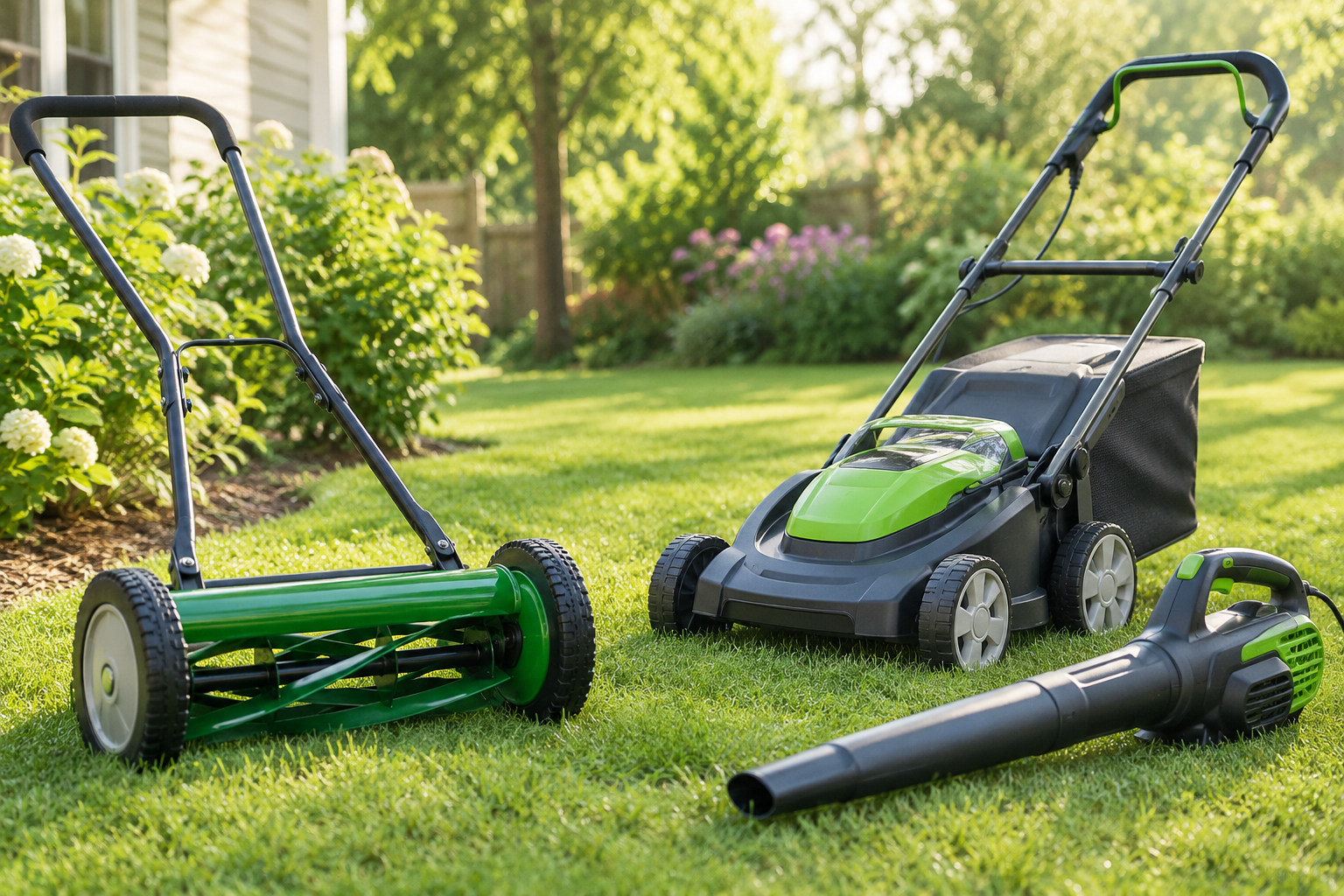
Maintaining a beautiful lawn and garden doesn’t have to come at the expense of the environment or your ears. Every weekend, neighborhoods across the country fill with the roar and rumble of gas-powered mowers, leaf blowers, and trimmers. But what if there were a better, cleaner, and quieter way to care for your outdoor space?
There is.
By switching to manual or electric lawn tools, you can reduce air pollution, lower greenhouse gas emissions, decrease noise pollution, and make yard work more enjoyable. It’s a win for your yard, your community, and the planet.
The Problem with Gas-Powered Lawn Tools
Gas-powered lawn equipment has been a landscaping standard for decades, but it’s time to rethink that tradition.
One Hour = 100 Miles?
You may have heard that using a gas-powered lawn mower for one hour produces as much smog-forming pollution as driving a typical gasoline car for 100 miles. This comparison comes from the California Air Resources Board (CARB) and refers specifically to smog-forming emissions, not carbon dioxide or total greenhouse gas emissions.
Small gasoline engines generally have fewer emission-control technologies than modern passenger vehicles, allowing them to emit relatively high levels of pollutants.
Another concern is the overall contribution of lawn equipment to air pollution. According to the U.S. Environmental Protection Agency (EPA), gasoline-powered lawn and garden equipment is a significant source of emissions from small off-road engines.
What’s in Those Emissions?
Gas-powered lawn equipment emits pollutants including:
- Carbon monoxide (CO)
- Nitrogen oxides (NOx)
- Volatile organic compounds (VOCs)
- Fine particulate matter (PM2.5)
- Carbon dioxide (CO₂)
These pollutants contribute to smog formation, ground-level ozone, poor air quality, and climate change.
The Case for Electric Lawn Tools
Electric lawn tools, whether battery-powered or corded, are a modern alternative to gasoline-powered equipment. They provide excellent performance while reducing emissions and noise.
Cleaner and Greener
Battery-powered lawn tools produce zero tailpipe emissions during operation.
While electricity generation may still produce emissions depending on your local energy mix, electric equipment generally has a lower lifetime environmental impact than comparable gasoline-powered tools. Their environmental benefits increase even further when powered by renewable energy such as solar or wind.
Quieter Operation
One of the biggest advantages of electric equipment is reduced noise.
Typical noise levels include:
- Gas-powered mowers and leaf blowers: 90–100+ decibels (dB)
- Battery-powered equipment: approximately 65–75 dB, depending on the model
Lower noise levels help reduce neighborhood noise pollution and lessen the risk of hearing damage from prolonged exposure.
Lower Maintenance
Electric tools require far less maintenance than gasoline-powered models.
You won’t need to:
- Change engine oil
- Replace spark plugs
- Clean carburetors
- Replace fuel filters
- Store gasoline
Instead, simply charge the battery (or plug in the tool), keep the blades sharp, and perform occasional cleaning.
Going a Step Further: Manual Tools
For smaller yards or anyone looking for the most environmentally friendly option, manual lawn tools are an excellent choice.
They require:
- No gasoline
- No electricity during operation
- No engine emissions
- Minimal maintenance
Top Manual Tools to Consider
- Reel Mowers – Lightweight, quiet, and ideal for small lawns
- Manual Edgers – Perfect for sidewalks and garden borders
- Hand Clippers and Pruners – Great for detailed trimming
- Push Sweepers or Rakes – Quiet alternatives to gas-powered leaf blowers
Bonus: It’s Good for Your Health
Using manual lawn tools provides light to moderate physical activity.
Benefits may include:
- Increased daily exercise
- Improved cardiovascular health
- Calorie burning
- More time outdoors
Making the Switch: Tips for Transitioning
Ready to make the move? Here are a few simple ways to get started.
Start Small
Replace your leaf blower or string trimmer first. These are often among the loudest and most polluting pieces of lawn equipment.
Evaluate Your Lawn Size
- Small lawns: Manual reel mowers or compact battery mowers work well.
- Medium lawns: Most modern battery mowers provide ample runtime.
- Large lawns: Consider higher-capacity batteries or multiple battery packs.
Look for Quality Features
When shopping, consider tools with:
- Interchangeable battery systems
- Brushless motors
- Good warranties
- Easily replaceable batteries
Popular manufacturers include:
- EGO
- Greenworks
- Ryobi
- Worx
- Sun Joe
- Toro
- Milwaukee
- DeWalt
(Brand names are provided as examples, not endorsements.)
Recycle or Donate Old Equipment
Many communities offer recycling or household hazardous waste programs that accept small gasoline engines. If your equipment is still usable, consider donating or selling it before disposal.
Real Results: Cleaner Air and Happier Neighborhoods
Communities that transition to electric and manual lawn equipment can benefit from:
- Cleaner air
- Reduced neighborhood noise
- Lower greenhouse gas emissions
- Reduced fuel use
Many cities and states are also encouraging the use of zero-emission landscaping equipment through incentive programs and local policies.
And while quieter tools are certainly more neighbor-friendly, always follow your local noise ordinances—even if your equipment is quieter than traditional gas-powered models.
Final Thoughts: Choose Smarter, Live Cleaner
When it comes to lawn care, your choices matter.
Replacing gas-powered equipment with electric or manual alternatives can reduce air pollution, lower noise levels, simplify maintenance, and create a more enjoyable outdoor experience.
You don’t have to replace everything at once. Even switching one tool can make a meaningful difference over time.
The next time you hear the roar of a gas-powered mower, remember—there are cleaner, quieter options available.
Resources & References
- U.S. Environmental Protection Agency (EPA) – Regulations for Emissions from Small Equipment & Tools
https://www.epa.gov/regulations-emissions-vehicles-and-engines/regulations-emissions-small-equipment-tools - U.S. Environmental Protection Agency (EPA) – What You Can Do to Reduce Pollution from Vehicles and Engines
https://www.epa.gov/transportation-air-pollution-and-climate-change/what-you-can-do-reduce-pollution-vehicles-and - California Air Resources Board (CARB) – Zero-Emission Landscaping Equipment
https://ww2.arb.ca.gov/our-work/programs/zero-emission-landscaping-equipment - California Air Resources Board (CARB) – Small Off-Road Engine Fact Sheet
https://ww2.arb.ca.gov/resources/fact-sheets/sore-small-engine-fact-sheet - University of Georgia Extension – Lawn and Garden Resources
https://extension.uga.edu/topic-areas/home-garden.html - U.S. Department of Energy – Energy Saver Tips for Homeowners
https://www.energy.gov/energysaver
