


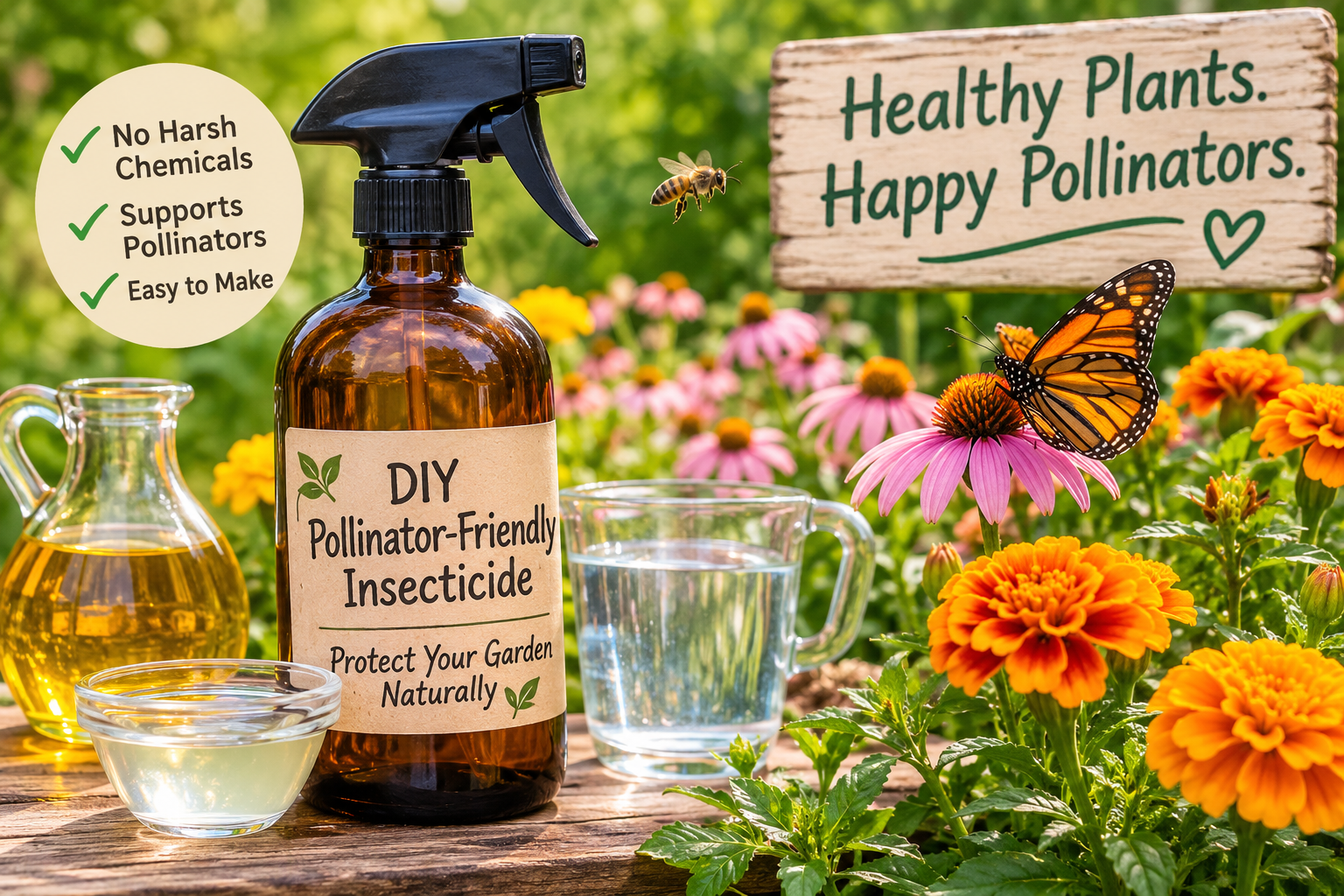
Every gardener knows the frustration of battling pests that threaten to undo all the care and effort invested in growing healthy plants. While it’s tempting to reach for fast-acting chemical pesticides, many conventional insecticides can harm more than just garden pests—they may also affect bees, butterflies, and other beneficial insects that are essential to healthy ecosystems.
Fortunately, there are lower-impact alternatives you can make at home. One common option is a homemade horticultural oil spray, which can help control certain soft-bodied pests when used correctly. While no insecticide is completely harmless, careful application can significantly reduce risks to pollinators while protecting your plants.
The Hidden Cost of Conventional Pesticides
Many conventional insecticides are designed to kill insects indiscriminately. Depending on the product and how it’s used, they may affect beneficial insects as well as pests.
Research has identified habitat loss, pesticide use, climate change, invasive species, and pollution as major contributors to declining insect populations worldwide. A widely cited scientific review estimated that approximately 40% of insect species are experiencing population declines, although scientists note that the rate varies by region and species.
For gardeners who want to protect both their plants and local biodiversity, reducing unnecessary pesticide use is one practical step toward creating healthier landscapes.
A Simple, Effective, Lower-Impact Solution
A homemade horticultural oil spray can help manage common soft-bodied insects, including:
- Aphids
- Spider mites
- Whiteflies
- Mealybugs
- Some scales (crawler stage)
These sprays work by coating the insects and blocking their breathing pores (spiracles), rather than poisoning them.
Ingredients
For the Concentrate
- 1 cup vegetable oil (olive, canola, or other light vegetable oil)
- 1 tablespoon mild liquid soap (not automatic dishwasher detergent or products containing degreasers, bleach, or antibacterial additives)
For the Spray
- 2 teaspoons of the concentrate
- 1 cup warm water
- A clean spray bottle (glass or plastic)
Note: Many university Extension services recommend horticultural oil or lightweight vegetable oils rather than exclusively olive oil. Mild liquid soap acts as the emulsifier.
Instructions
1. Make the Concentrate
Combine:
- 1 cup vegetable oil
- 1 tablespoon mild liquid soap
Shake until thoroughly mixed.
2. Prepare the Spray
Mix:
- 2 teaspoons concentrate
- 1 cup warm water
Shake before each use since the oil naturally separates.
3. Apply Carefully
Spray directly onto affected leaves, especially the undersides where pests often gather.
For best results:
- Apply early in the morning or late in the evening
- Spray only affected plants
- Reapply after heavy rain if necessary
Why This Spray Is More Pollinator-Friendly
When used correctly, homemade horticultural oil sprays generally pose less risk to pollinators than many broad-spectrum insecticides because:
- They leave little residual toxicity after drying.
- They work through direct contact with pests rather than long-lasting chemical residues.
- They can be applied only where pests are present rather than across an entire garden.
However, “natural” does not automatically mean harmless.
Responsible Use Guidelines
Even homemade insecticides should be used carefully.
Follow these best practices:
- Avoid spraying open flowers or blossoms.
- Never spray when bees or butterflies are actively foraging.
- Apply early in the morning or near sunset.
- Spot-treat only affected plants instead of spraying the entire garden.
- Test the spray on a few leaves first and wait 24 hours for signs of leaf burn.
- Avoid spraying during hot weather (generally above 85°F/29°C) because oil sprays can damage foliage.
- Do not spray drought-stressed plants.
These simple precautions help protect both your plants and beneficial insects.
Complementary Strategies for Natural Pest Control
A healthy garden depends on more than one solution.
Encourage Beneficial Insects
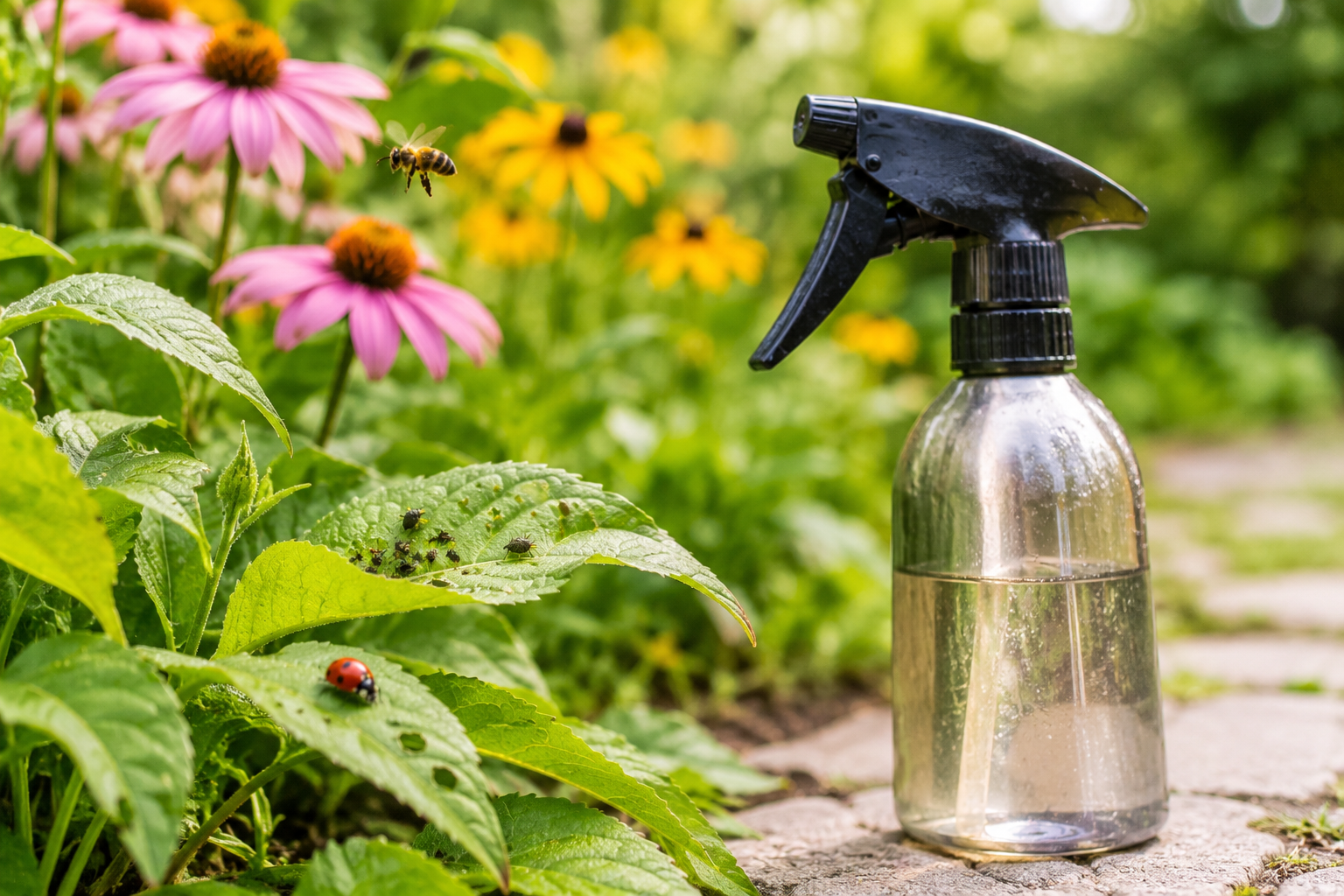
Lady beetles (ladybugs), lacewings, hoverflies, and parasitic wasps naturally prey on aphids and many other pests.
Planting diverse flowering species—especially native plants—helps support these beneficial insects.
Practice Companion Planting
Plants such as:
- Marigolds
- Basil
- Dill
- Alyssum
- Nasturtiums
can attract beneficial insects or help discourage certain pests as part of an integrated garden strategy.
Build Healthy Soil
Healthy soil grows stronger plants that are naturally more resistant to pests.
Adding compost, rotating crops, and maintaining plant diversity can reduce pest pressure over time.
Monitor Before You Spray
Inspect plants regularly.
Many pest problems can be managed by removing affected leaves or washing insects off with a strong stream of water before resorting to any spray.
The Broader Impact: Gardening That Supports Life
Pollinators are essential to both natural ecosystems and agriculture.
According to the U.S. Department of Agriculture, animal pollinators help pollinate about 75% of the world’s flowering plants and approximately 35% of global food crops.
By minimizing pesticide use and choosing targeted, lower-impact alternatives whenever possible, home gardeners can help create healthier habitats for pollinators while still protecting their gardens.
Safe, Sustainable, and Simple
This homemade horticultural oil spray demonstrates that effective pest management doesn’t always require harsh chemicals. When used responsibly, it can help control common soft-bodied pests while reducing unnecessary risks to pollinators and other beneficial insects.
No pest-control method is completely without risk, but thoughtful gardening practices—combined with careful application, healthy soil, and support for beneficial insects—can help your garden thrive naturally.
Small choices made in our own backyards can collectively make a meaningful difference for pollinators, biodiversity, and the environment.
Resources & References
National Resources
- U.S. Environmental Protection Agency (EPA) – Protecting Bees and Other Pollinators from Pesticides
https://www.epa.gov/pollinator-protection - U.S. Department of Agriculture (USDA) – Pollinators
https://www.usda.gov/topics/pollinators - Xerces Society for Invertebrate Conservation – Protecting Pollinators from Pesticides
https://www.xerces.org/pesticides - University of California Integrated Pest Management (UC IPM) – Managing Aphids & Horticultural Oils
https://ipm.ucanr.edu/ - Cornell University Integrated Pest Management Program
https://cals.cornell.edu/integrated-pest-management
Georgia Resources
- University of Georgia Extension – Home Garden Resources
https://extension.uga.edu/topic-areas/home-garden.html - University of Georgia Extension – Georgia Pollinator Plants
https://extension.uga.edu/topic-areas/environment/pollinators.html
Scientific References
- Sánchez-Bayo, F. & Wyckhuys, K.A.G. (2019). Worldwide decline of the entomofauna: A review of its drivers. Biological Conservation.
https://www.sciencedirect.com/science/article/pii/S0006320718313636 - IPBES (Intergovernmental Science-Policy Platform on Biodiversity and Ecosystem Services) – The Assessment Report on Pollinators, Pollination and Food Production
https://ipbes.net/assessment-reports/pollinators
