


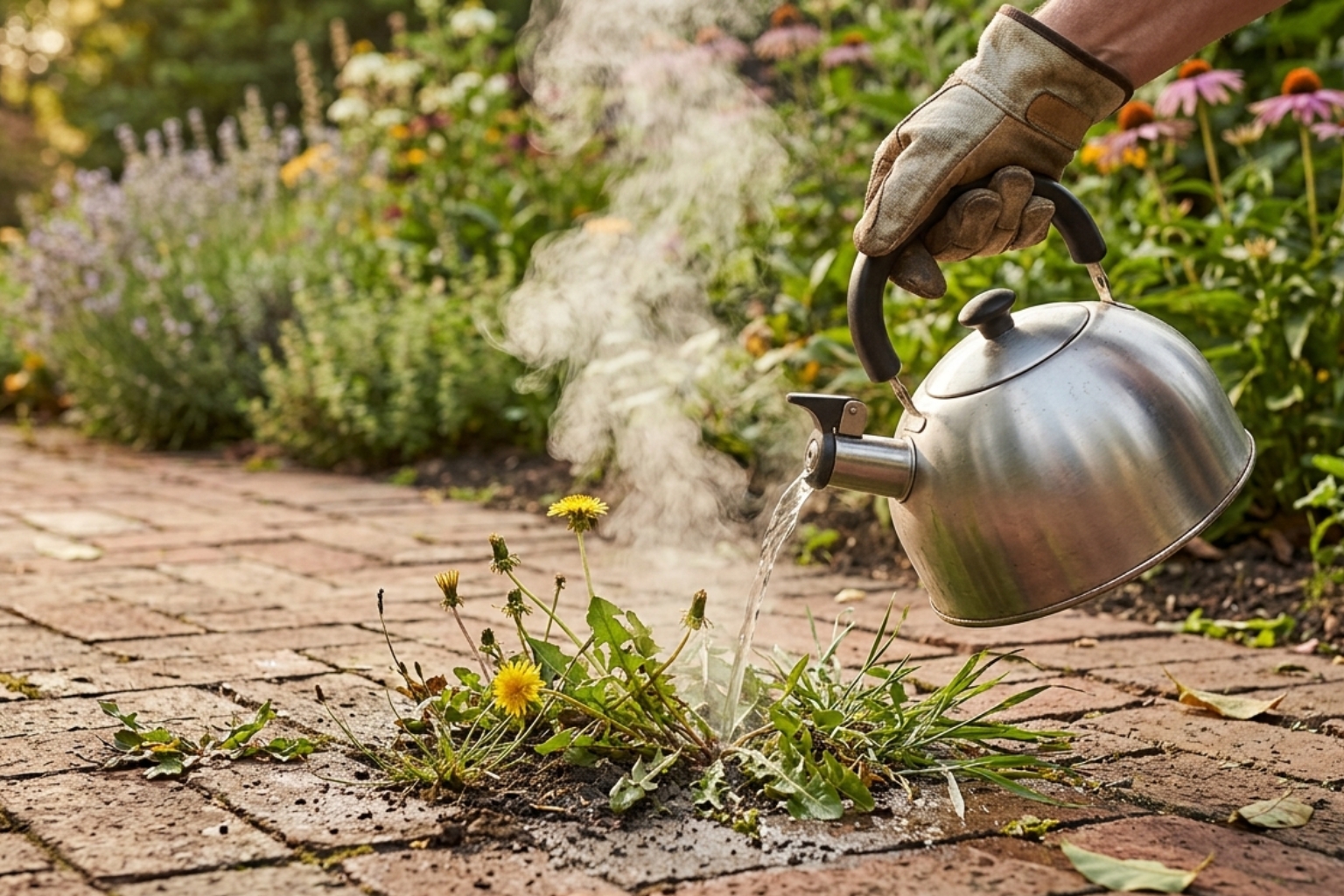
Weeds seem to pop up overnight, in driveway cracks, sidewalk seams, patio pavers, and between bricks in garden paths. While chemical herbicides such as glyphosate have long been a common solution, there’s a simple alternative for many hardscape areas: boiling water.
Yes, it’s as easy as it sounds. Carefully pouring boiling water directly onto weeds can kill or severely damage many small weeds without introducing synthetic herbicides into your environment. While it isn’t the right solution for every situation, it can be an effective option for weeds growing in cracks, gravel, and other non-planted areas.
Let’s explore how boiling water works, when it’s most effective, and why it can be part of a more environmentally friendly weed management strategy.
Why Consider Alternatives to Chemical Herbicides?
Chemical herbicides can be effective, but they also raise environmental and health concerns when used improperly or excessively.
Glyphosate and the Environment
Glyphosate, the active ingredient in many weed killers, is one of the most widely used herbicides in the world. Studies by the U.S. Geological Survey (USGS) have detected glyphosate in streams, rivers, rainfall, and some groundwater in agricultural and urban areas.
Improper use can contribute to:
- Contamination of nearby waterways through runoff
- Potential impacts on aquatic plants and some aquatic organisms
- Increased reliance on herbicides, contributing to herbicide-resistant weeds
When using any herbicide, always follow the label directions and local regulations.
Safety Around Kids, Pets, and Wildlife
One advantage of boiling water is that it leaves no chemical residue after cooling.
However, boiling water itself presents an immediate burn hazard. Always:
- Keep children and pets away during application.
- Wear closed-toe shoes and long pants.
- Pour carefully to avoid splashing.
Unlike herbicides, there is no residual chemical exposure once the water has cooled.
How Boiling Water Works
Boiling water kills weeds through heat.
The high temperature damages plant cells and causes the foliage and stems to collapse. Small annual weeds and shallow-rooted plants often die after one treatment, while larger perennial weeds may require repeated applications.
Boiling water works best because it:
- Quickly damages leaves and stems
- Can injure shallow root systems
- Leaves behind no synthetic chemical residues
- Does not contribute to herbicide resistance
Best Places to Use Boiling Water
Boiling water is most effective for weeds growing in:
- Sidewalk cracks
- Driveway cracks
- Between patio pavers
- Gravel paths
- Stone walkways
- Fence lines away from desirable plants
It is not recommended for use in flower beds, vegetable gardens, or lawns because it will also damage desirable plants and beneficial soil organisms near the application area.
How to Use Boiling Water Safely and Effectively
Step 1: Boil Water
Bring water to a full boil (212°F or 100°C at sea level).
Step 2: Wear Protective Clothing
Wear closed-toe shoes and use caution when carrying the hot water.
Step 3: Pour Carefully
Slowly pour the water directly onto the center (crown) of the weed.
Step 4: Repeat if Needed
Some weeds, especially perennial species, may need additional treatments over several weeks.
Safety Tips
- Avoid pouring boiling water onto desirable plants.
- Keep away from tree roots and ornamental shrubs.
- Be cautious on decorative stone, concrete, or asphalt surfaces, as sudden temperature changes may damage some materials over time.
- Never carry large pots of boiling water through crowded areas.
Environmental Benefits
Using boiling water instead of chemical herbicides can help reduce the amount of synthetic pesticides used around your home.
Potential benefits include:
- Reducing the risk of herbicide runoff into storm drains and waterways
- Eliminating chemical residues on treated surfaces
- Lowering the likelihood of accidental exposure for children and pets
- Supporting integrated, low-chemical landscape management
Likewise, the claim that “many herbicide sprays contribute to volatile organic compound (VOC) emissions” is too broad. While some pesticide formulations contain VOCs, not all herbicides do. This statement has been removed for accuracy.
Other Natural Weed Control Options
Boiling water works best when combined with other sustainable weed management practices, including:
- Mulching to block sunlight and suppress weed growth
- Hand weeding, especially before weeds produce seeds
- Horticultural vinegar products (used according to label directions)
- Corn gluten meal as a pre-emergent for some situations
- Flame weeding (used carefully and only where appropriate)
No single method works for every weed. Combining several approaches is often the most effective long-term strategy.
Final Thoughts: Boil, Don’t Spray
The next time you notice weeds growing between the cracks in your sidewalk or driveway, consider reaching for a kettle instead of a chemical spray.
Boiling water is inexpensive, easy to use, and can be an effective weed-control method in many non-planted areas. While it isn’t a complete replacement for every herbicide or every weed problem, it offers a practical way to reduce chemical use around your home.
Small choices like this can help protect local waterways, reduce unnecessary pesticide use, and encourage more sustainable gardening practices.
Sometimes the simplest solutions really are the most effective.
Resources & References
- U.S. Geological Survey (USGS) – Glyphosate in the Environment
https://www.usgs.gov/mission-areas/water-resources - U.S. Environmental Protection Agency (EPA) – Glyphosate Information and Registration Review
https://www.epa.gov/ingredients-used-pesticide-products/glyphosate - University of California Integrated Pest Management (UC IPM) – Weed Management in Landscapes
https://ipm.ucanr.edu - University of Minnesota Extension – Managing Weeds in Home Landscapes
https://extension.umn.edu - University of Georgia Extension – Weed Management Resources for Home Landscapes
https://extension.uga.edu - National Pesticide Information Center (NPIC) – Glyphosate Technical Fact Sheet
https://npic.orst.edu/factsheets/glyphotech.html
