


Imagine stepping outside and hearing the gentle hum of bees, spotting butterflies fluttering from flower to flower, and seeing your lawn not as a patch of grass to maintain, but as a living, breathing habitat. That’s the spirit behind No Mow May, a simple movement that encourages homeowners and land managers to put away the lawn mower—for just one month—and give nature a chance to thrive.
Every spring, lawns across the country are trimmed to perfection. But what if, for a few weeks, we resisted the urge to mow and allowed grasses and flowering plants to grow? You might be surprised by the difference it can make—not just for your yard, but for bees, butterflies, birds, and other wildlife.
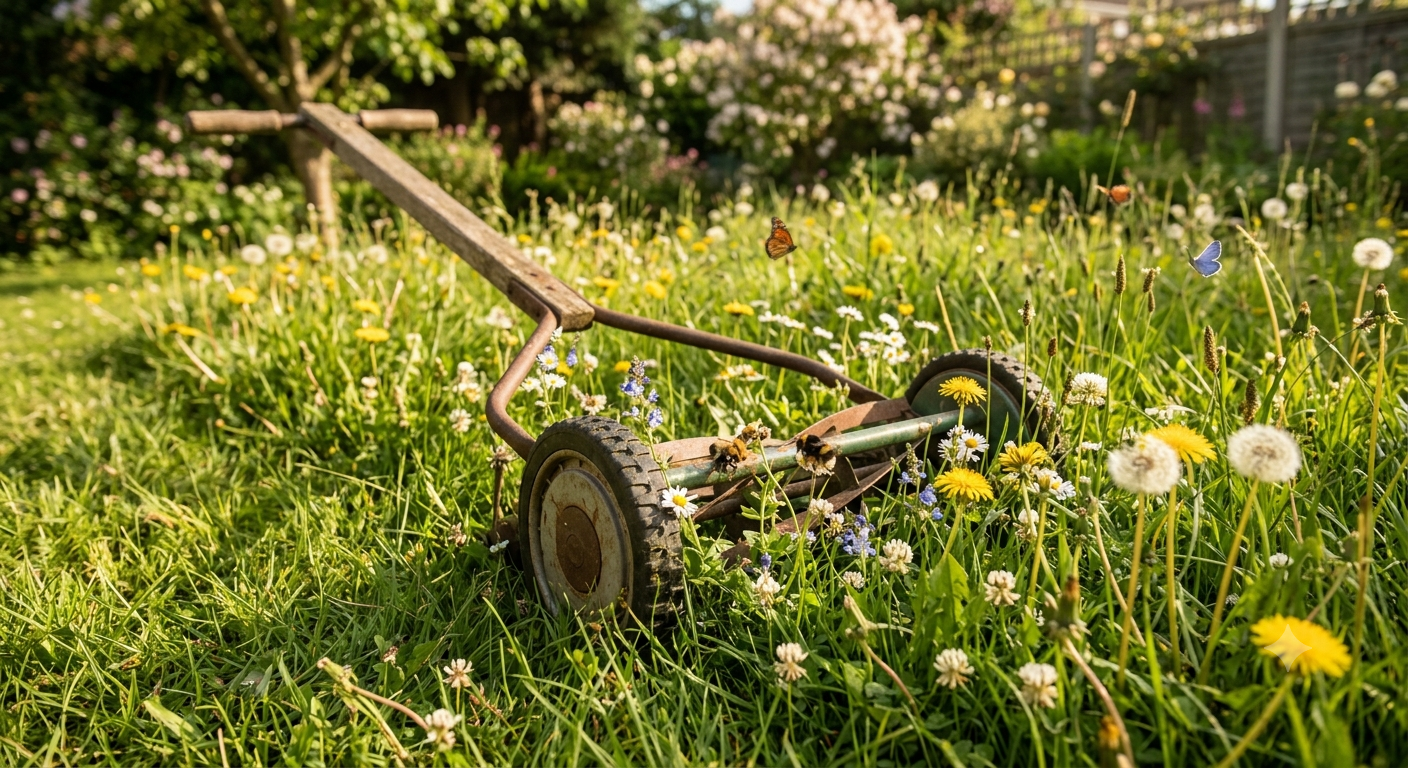
What Is No Mow May?
No Mow May is an initiative that encourages people to pause or significantly reduce lawn mowing during the month of May to provide food and habitat for early-season pollinators.
The movement originated in the United Kingdom through the conservation charity Plantlife and later gained popularity in the United States, particularly through Bee City USA in Appleton, Wisconsin. Today, communities across North America participate in various forms of the campaign.
Why Does Skipping the Mower Matter?
Traditional turfgrass lawns often provide little food or shelter for wildlife. Allowing flowering plants to bloom—even temporarily—can offer valuable resources for pollinators.
1. Supports Pollinators
Many native bees emerge in spring when nectar and pollen sources can be limited. Allowing flowering plants such as clover, violets, self-heal, and, in some areas, dandelions to bloom provides important forage for bees, butterflies, and other beneficial insects.
2. Increases Biodiversity
Allowing parts of your lawn to grow naturally creates habitat for a wide variety of organisms. You may notice:
- More butterflies and moths
- Native bees and other pollinating insects
- Birds feeding on insects
- Beneficial insects such as lady beetles and lacewings
Even small patches of habitat can contribute to urban biodiversity.
3. Improves Soil Health
Longer grass generally develops deeper root systems, helping improve soil structure, reduce erosion, and increase water infiltration.
Leaving grass slightly taller can also help retain soil moisture during warmer weather.
4. Reduces Water and Chemical Use
Longer grass naturally shades the soil, helping reduce evaporation and keeping roots cooler during hot weather.
Healthier lawns often require:
- Less supplemental watering
- Fewer fertilizer applications
- Reduced herbicide use when combined with good lawn management practices
Common Misconceptions About No Mow May
“It will look messy.”
Natural landscapes don’t have to resemble abandoned yards. Keeping lawn edges trimmed, mowing pathways, or displaying a No Mow May sign can show that your landscape is intentionally managed.
“It will attract ticks or pests.”
Ticks are more commonly associated with wooded areas, dense brush, and leaf litter than with open lawns. However, if ticks are common in your area, keep walking paths mowed and check yourself after spending time outdoors.
“Won’t it damage my lawn?”
Generally, no—but avoid cutting extremely tall grass back to a very short height all at once. Instead, gradually return to your normal mowing schedule after May.
How to Participate in No Mow May
✅ Step 1: Reduce or Pause Mowing
Leave all or part of your lawn unmowed during May—or adapt the timing to your local climate if pollinators emerge earlier or later.
✅ Step 2: Let Flowers Bloom
Allow naturally occurring flowering plants to bloom where appropriate.
If your lawn consists only of turfgrass with few flowering plants, consider adding native flowers in the future for greater benefit.
✅ Step 3: Share the Purpose
Install a yard sign explaining your participation. It helps educate neighbors and starts conversations about pollinator conservation.
✅ Step 4: Resume Mowing Gradually
Raise your mower height and trim the lawn over multiple mowings instead of removing all the growth at once.
Going Beyond May: Rethinking the Modern Lawn
For many people, No Mow May is the first step toward creating a more wildlife-friendly landscape.
Long-term improvements include:
- Reducing the amount of traditional lawn
- Planting native wildflowers
- Creating pollinator gardens
- Installing rain gardens
- Mowing less frequently throughout the growing season
- Leaving small natural habitat areas around your yard
- Reducing or eliminating pesticide use
These changes provide far greater benefits than a single month without mowing.
Final Thoughts: One Small Act, Many Big Impacts
No Mow May is about more than skipping yard work. It encourages us to rethink how our landscapes support—or fail to support—the wildlife around us.
While simply not mowing for one month won’t “save the bees,” it can raise awareness and become the first step toward more sustainable lawn care. By combining reduced mowing with native plants, fewer pesticides, and diverse habitat, homeowners can create landscapes that benefit pollinators throughout the year.
So this spring, consider giving part of your lawn a little more freedom. You may discover that a slightly wilder yard is full of buzzing bees, colorful butterflies, singing birds, and a renewed connection to nature.
Resources & References
- Plantlife (UK) – No Mow May Campaign
https://www.plantlife.org.uk/campaigns/nomowmay/ - Xerces Society – No Mow May: An Easy Start for a Nature-Friendly Yard (But Not the Finish Line)
https://www.xerces.org/blog/no-mow-may-easy-start-for-nature-friendly-yard-but-not-finish-line - Xerces Society – No Mow May Resources and Printable Yard Sign
https://www.xerces.org/publications/other/no-mow-may - Bee City USA – No Mow May Information
https://beecityusa.org/no-mow-may/ - U.S. Environmental Protection Agency (EPA) – Healthy Lawns and the Environment
https://www.epa.gov/soakuptherain - University of Minnesota Bee Lab – Pollinator-Friendly Lawn Resources
https://beelab.umn.edu - University of Georgia Extension – Pollinator Conservation Resources
https://extension.uga.edu/topic-areas/environment/pollinators.html
