


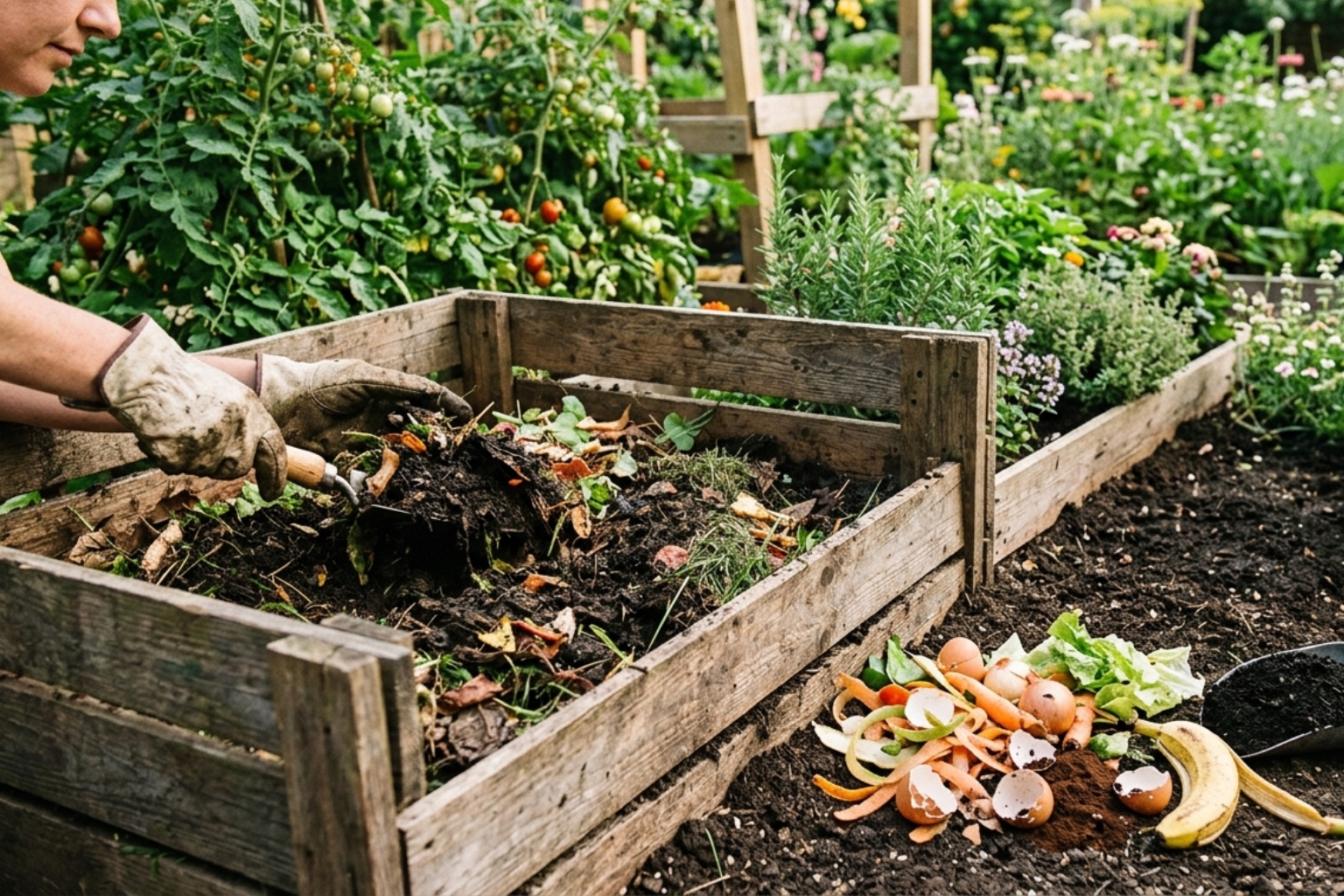
In today’s world, where sustainability and eco-conscious living are more important than ever, one of the simplest yet most impactful things you can do starts right in your kitchen. Composting food scraps not only reduces waste but also creates a powerful resource for your garden: nutrient-rich compost. By turning what you might normally throw away into valuable organic matter, you can improve your soil’s health, support plant growth, and contribute to a healthier environment.
What Is Kitchen Compost?
Kitchen compost is made from biodegradable materials generated during everyday cooking and food preparation. This typically includes fruit and vegetable peels, coffee grounds, eggshells, tea bags, and sometimes used paper towels or napkins (as long as they are not coated in chemicals or grease).
When these materials decompose in a controlled environment, they break down into a dark, crumbly substance called humus—often referred to by gardeners as “black gold.”
This humus is rich in nutrients and beneficial microorganisms that help enrich soil, improve structure, and support healthier plant growth.
Tea bags may contain plastic in some brands, which can affect compostability unless labeled “plastic-free” or “compostable.”
Why Use Kitchen Compost in Your Garden?
1. Improves Soil Health
Compost adds organic matter that feeds soil organisms and improves soil structure. It provides essential nutrients like nitrogen, phosphorus, and potassium in a natural, slow-release form. This supports beneficial bacteria and fungi that are critical for healthy plant growth.
2. Enhances Water Retention
One of the most significant benefits of compost is its ability to improve soil’s water-holding capacity. Research shows that increasing soil organic matter by just 1% can help soil hold approximately 20,000 gallons of additional water per acre. This leads to improved drought resistance and reduced irrigation needs.
3. Reduces the Need for Chemical Fertilizers
Unlike synthetic fertilizers, which can lead to soil degradation and water pollution when overused, compost improves soil fertility naturally over time. It supports long-term soil health without harmful environmental side effects.
4. Reduces Kitchen and Yard Waste
According to the U.S. Environmental Protection Agency (EPA), more than 30% of what Americans throw away is compostable material. Diverting these materials from landfills reduces methane emissions, a greenhouse gas significantly more potent than carbon dioxide.
5. Supports a Thriving Ecosystem
Healthy compost supports a diverse ecosystem of worms, fungi, bacteria, and insects. These organisms work together to break down organic matter and cycle nutrients back into the soil, creating a balanced and resilient garden environment.
How to Start Composting at Home
Step 1: Choose a Compost Method
Depending on your space and lifestyle, you can choose from several composting systems:
- Outdoor compost bins or piles: Best for yards and gardens
- Compost tumblers: Easier mixing and faster decomposition
- Indoor compost bins: Often paired with municipal compost pickup programs
- Vermicomposting: Uses worms to break down food waste indoors or in small spaces
Step 2: Collect the Right Materials
Composting works best when you balance “greens” and “browns”:
Greens (nitrogen-rich):
Fruit and vegetable scraps, coffee grounds, tea bags (if compostable), and fresh grass clippings
Browns (carbon-rich):
Dry leaves, shredded cardboard, newspaper, and paper towels/napkins
Avoid adding meat, dairy, oily foods, and pet waste, as these can attract pests and create odors.
Step 3: Maintain Your Compost
- Turn your compost pile every couple of weeks to improve aeration and speed up decomposition
- Keep moisture levels similar to a wrung-out sponge
- Depending on the method used, compost can be ready in a few weeks to several months when it becomes dark, crumbly, and earthy-smelling
Applying Compost to Your Garden
Once your compost is ready, you can use it in several effective ways:
- Top-dress garden beds with a 1–2 inch layer
- Mix into potting soil for houseplants or containers
- Use in seed starting mixes to support young plant growth
- Apply a thin layer to lawns to improve soil quality and grass health
Real Benefits You Can See
Gardeners who regularly use compost often notice:
- Increased vegetable and fruit yields
- Fewer pest and disease issues
- Reduced watering needs
- Healthier soil and stronger plant growth
- More vibrant flowers and ornamental plants
Whether you’re growing food, flowers, or maintaining a home landscape, compost is one of the most effective and low-cost tools available.
Thoughts: Turn Waste Into Wealth
Using kitchen compost is a small change that creates meaningful environmental impact. It’s a natural cycle of renewal—what was once considered waste becomes nourishment for new life. Composting also strengthens your connection to the environment, showing how everyday choices contribute to healthier soil and a more sustainable future.
Resources & References
- U.S. Environmental Protection Agency (EPA) – Composting at Home
https://www.epa.gov/recycle/composting-home - University of Georgia Cooperative Extension – Composting Basics
https://extension.uga.edu/publications/detail.html?number=C1017 - University of Georgia Extension (Soil & Water Resources Publications)
https://extension.uga.edu/county-offices.html - Athens-Clarke County (Georgia) Solid Waste & Recycling Program
https://www.accgov.com/solidwaste - USDA Natural Resources Conservation Service (Soil Health Information)
https://www.nrcs.usda.gov/conservation-basics/natural-resource-concerns/soil/soil-health
