



In the face of growing environmental challenges and increasing water scarcity, one ancient yet highly effective technique is making a major comeback—rainwater harvesting. For eco-conscious homeowners, gardeners, and sustainability advocates, collecting rainwater is an easy and impactful way to conserve natural resources while maintaining a healthy and thriving garden.
In this blog, we’ll explore what rainwater harvesting is, how it benefits your garden and the environment, and how to set up a simple system that can deliver meaningful results.
What Is Rainwater Harvesting?
At its core, rainwater harvesting is the process of collecting, storing, and reusing rainwater for various purposes. While large-scale systems are often used in agriculture and commercial settings, residential systems are typically smaller and designed to collect rainwater from rooftops using gutters and downspouts.
Common residential systems include:
- Rain barrels
- Cisterns
- Underground storage tanks
- Rain gardens that help absorb runoff
Rainwater is naturally soft and generally free of chlorine and many treatment chemicals commonly found in municipal water supplies, making it well-suited for watering gardens, lawns, and ornamental plants.
Even a modest setup can help reduce household outdoor water use during peak watering seasons.
Why Harvest Rainwater?
Using harvested rainwater for gardening and irrigation offers several important benefits.
1. Conserves Municipal Water Supplies
During warmer months, water demand often increases because of irrigation, car washing, and outdoor activities. Using harvested rainwater helps reduce pressure on local water systems and decreases reliance on treated drinking water for non-potable uses.
2. Helps Reduce Water Bills
Outdoor watering can significantly increase utility costs. According to the U.S. Environmental Protection Agency (EPA), a rain barrel can save approximately 1,300 gallons of water during peak summer months. Multiple barrels or larger cistern systems can increase savings over time.
3. Protects Local Waterways
Stormwater runoff from roofs, roads, and sidewalks can carry pollutants such as fertilizers, pesticides, oil, and debris into nearby waterways. Capturing rainwater helps reduce runoff, lowering the risk of erosion, flooding, and water pollution.
4. Promotes Plant Health
Rainwater is often preferred by gardeners because it lacks the salts and chlorine commonly found in treated tap water. Many plants, especially vegetables and flowering plants, respond well to natural rainwater irrigation.
Real Impact: The Numbers Speak
Rainwater harvesting can make a noticeable difference in water conservation efforts.
- One inch of rain falling on a 1,000-square-foot roof can produce approximately 600 gallons of water.
- Homes in areas with moderate annual rainfall can collect thousands of gallons each year.
- The EPA estimates that a single rain barrel can save around 1,300 gallons of water during summer months.
If entire neighborhoods adopted even small rainwater collection systems, the combined conservation impact could be substantial.
How to Get Started: Building Your Rainwater Harvesting System
Setting up a simple rainwater harvesting system is often easier than many homeowners expect.
Step 1: Choose Your Collection System
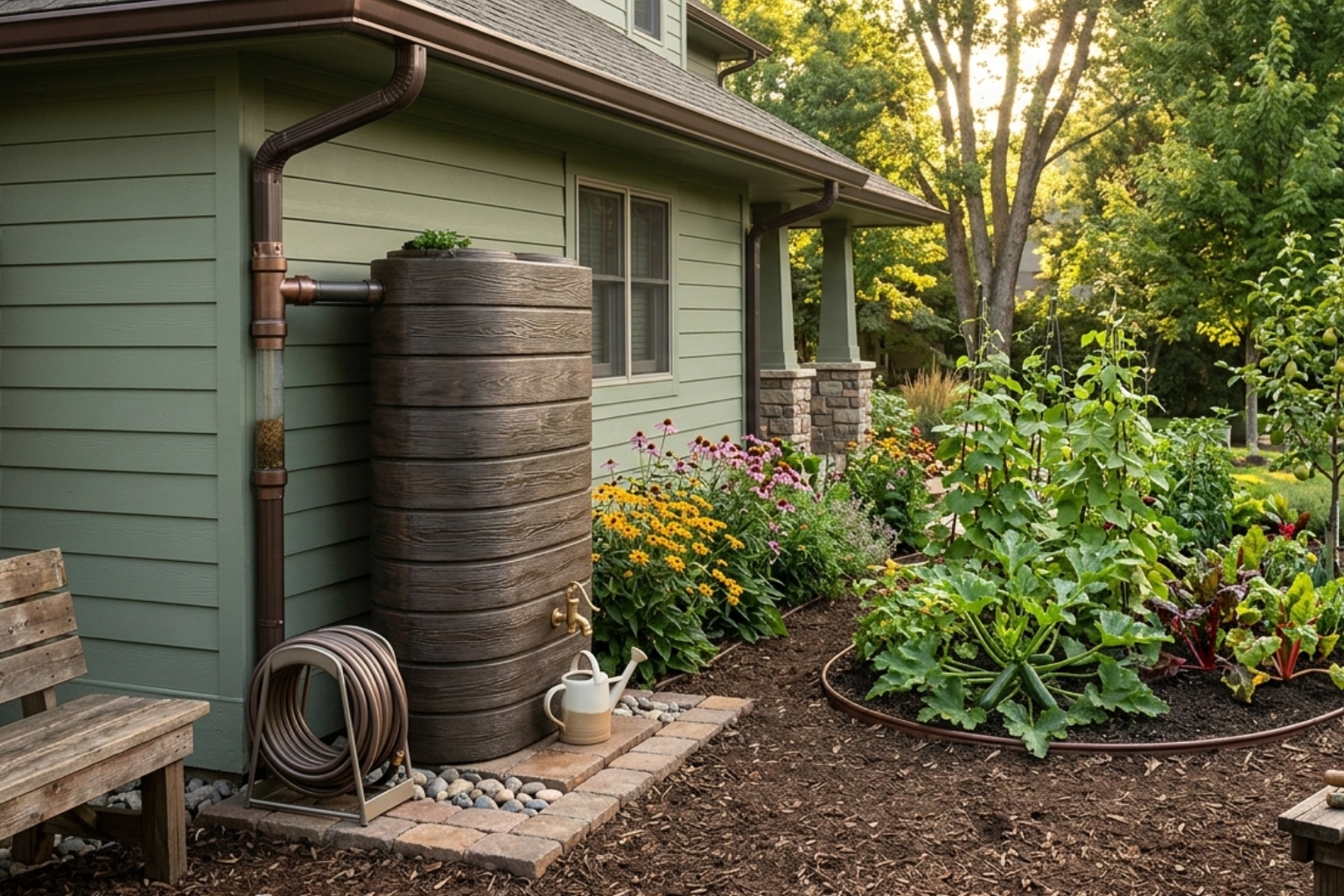
The most common option is a rain barrel connected to a downspout. Typical rain barrels hold between 50 and 100 gallons of water.
Other options include:
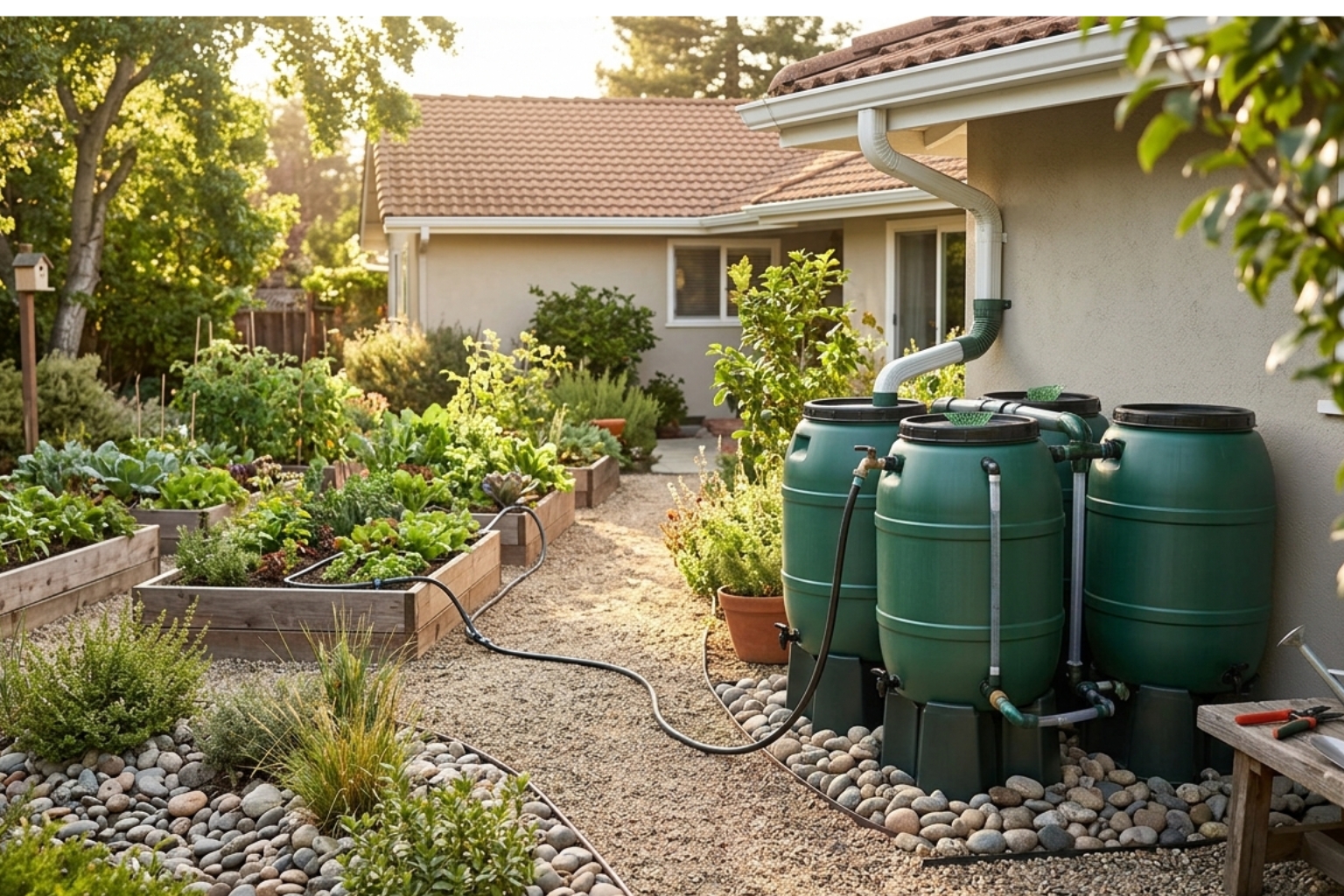
- Stackable barrels for additional storage
- Underground cisterns for larger capacity systems
- Rain gardens that naturally absorb and filter runoff
Step 2: Prepare the Collection Site
Choose a downspout close to your garden or landscape area. The location should be:
- Stable and level
- Slightly elevated to improve water flow
- Positioned where overflow can drain safely away from structures
Step 3: Install the Barrel and Connect It
Basic installation usually includes:
- Cutting or redirecting the downspout
- Attaching a diverter kit or flexible extension
- Installing a screen to block leaves, debris, and mosquitoes
- Adding a spigot near the bottom for watering cans or hoses
Step 4: Maintain the System
Regular maintenance helps keep the system functioning properly.
- Remove leaves and debris regularly
- Rinse the barrel periodically
- Check overflow valves and screens
- In colder climates, empty and store barrels before freezing temperatures arrive
Advanced Options: Going Beyond the Basics
Homeowners interested in expanding their systems may consider:
- Linking multiple barrels together
- Installing a first-flush diverter to reduce contaminants from roof runoff
- Adding a solar-powered pump for larger gardens
- Using permeable pavers or swales to direct excess water into rain gardens
Tips for Successful Rainwater Use in the Garden
- Use collected water within one to two weeks when possible to prevent stagnation
- Do not drink harvested rainwater unless it has been properly filtered and treated
- Avoid using water collected from chemically treated roofs on edible plants
- Water gardens early in the morning or late in the evening to reduce evaporation
A Small Step Toward Big Change
Adding rainwater harvesting to your routine is a simple action that can create lasting environmental benefits. It not only helps conserve water and reduce utility costs, but also supports healthier ecosystems and encourages more sustainable living practices.
During droughts or periods of extreme weather, stored rainwater can also provide an additional layer of resilience for gardens and landscapes.
Final Thoughts
Rainwater harvesting is more than just a gardening technique—it’s a practical and environmentally responsible habit that helps people work in harmony with natural resources. Whether you’re growing vegetables, caring for flowers, or maintaining a green lawn, collecting rainwater is a meaningful way to conserve water and support a healthier planet.
So the next time it rains, consider capturing some of that water and putting it to good use in your garden.
Resources & References
- U.S. Environmental Protection Agency (EPA) – Soak Up the Rain Program
https://www.epa.gov/soakuptherain - U.S. Environmental Protection Agency (EPA) – Rain Barrels
https://www.epa.gov/soakuptherain/soak-rain-rain-barrels - University of Georgia Extension – Water Conservation in the Landscape
https://extension.uga.edu/publications/detail.html?number=B1329 - University of Georgia Extension – Georgia Homeowner’s Handbook to Prepare for Water Shortages
https://extension.uga.edu/publications/detail.html?number=C1037 - Athens-Clarke County, Georgia – Stormwater Management Program
https://www.accgov.com/stormwater - Georgia Environmental Protection Division – Water Conservation Resources
https://epd.georgia.gov/watershed-protection-branch/water-conservation - USDA Natural Resources Conservation Service – Conservation Practices for Water Management
https://www.nrcs.usda.gov/conservation-basics/conservation-by-state/georgia
