


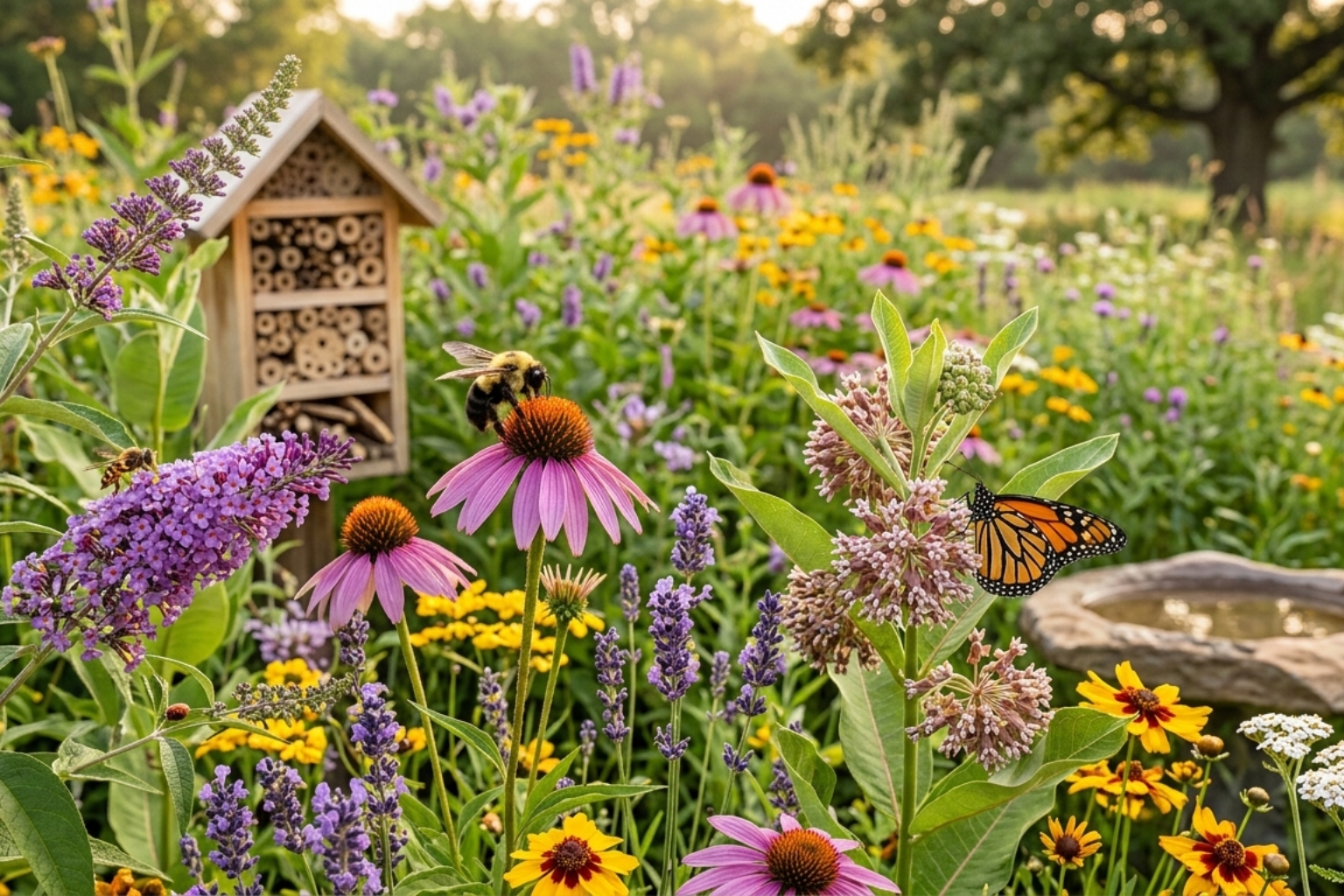
As pollinator populations continue to decline globally, every garden, balcony, or yard becomes an opportunity to support biodiversity. Pollinator gardens filled with native flowering plants that bloom across multiple seasons and include habitat features serve as important refuges for bees, butterflies, hummingbirds, bats, and other wildlife. In return, these pollinators help sustain food systems, ecosystems, and natural plant communities.
Why Pollinator Gardens Are Essential
1. Pollinators Support Agriculture and Natural Flora
Pollinators play a critical role in plant reproduction and food production. According to the Food and Agriculture Organization (FAO), approximately 75% of the world’s food crops depend at least partly on pollination, while nearly 90% of wild flowering plants rely on animal pollinators to reproduce.
These crops include many fruits, vegetables, nuts, seeds, coffee, and cocoa. Without pollinators, agricultural productivity and biodiversity would decline significantly.
Fact-check correction: The original claim that “35% of global food crops depend on pollinators” has been updated for clarity using current FAO-supported language that approximately 75% of crop types benefit from pollination to some extent.
2. Pollinators Are Facing Serious Declines
Many pollinator species are under pressure from habitat loss, pesticide exposure, disease, invasive species, and climate change. The Intergovernmental Science-Policy Platform on Biodiversity and Ecosystem Services (IPBES) reports that approximately 16% of vertebrate pollinators and more than 40% of invertebrate pollinator species may be threatened with extinction in some regions.
Declining pollinator populations threaten ecosystem stability and global food security.
3. Biodiversity Depends on Pollinators
Beyond agriculture, pollinators support countless native plants and natural ecosystems. Healthy pollinator populations contribute to stronger biodiversity, improved soil health, better water retention, and more resilient landscapes.
Creating pollinator-friendly spaces helps restore ecological balance in both urban and rural environments.
Designing an Effective Pollinator Garden
Choose Native Plants with Staggered Bloom Periods
Select native flowering plants suited to your region and climate. In Georgia and the southeastern United States, popular pollinator-friendly plants include:
- Milkweed
- Purple coneflower
- Bee balm
- Black-eyed Susan
- Goldenrod
- Native asters
- Coreopsis
Choose plants that bloom in spring, summer, and fall to provide continuous nectar and pollen sources throughout the growing season.
Plant in Clusters to Attract Pollinators
Grouping several plants of the same species together helps pollinators locate food more efficiently. Large clusters of blooms are easier for bees and butterflies to identify and visit repeatedly.
Provide Habitat and Water Sources
Pollinators need more than flowers to survive.
You can support them by:
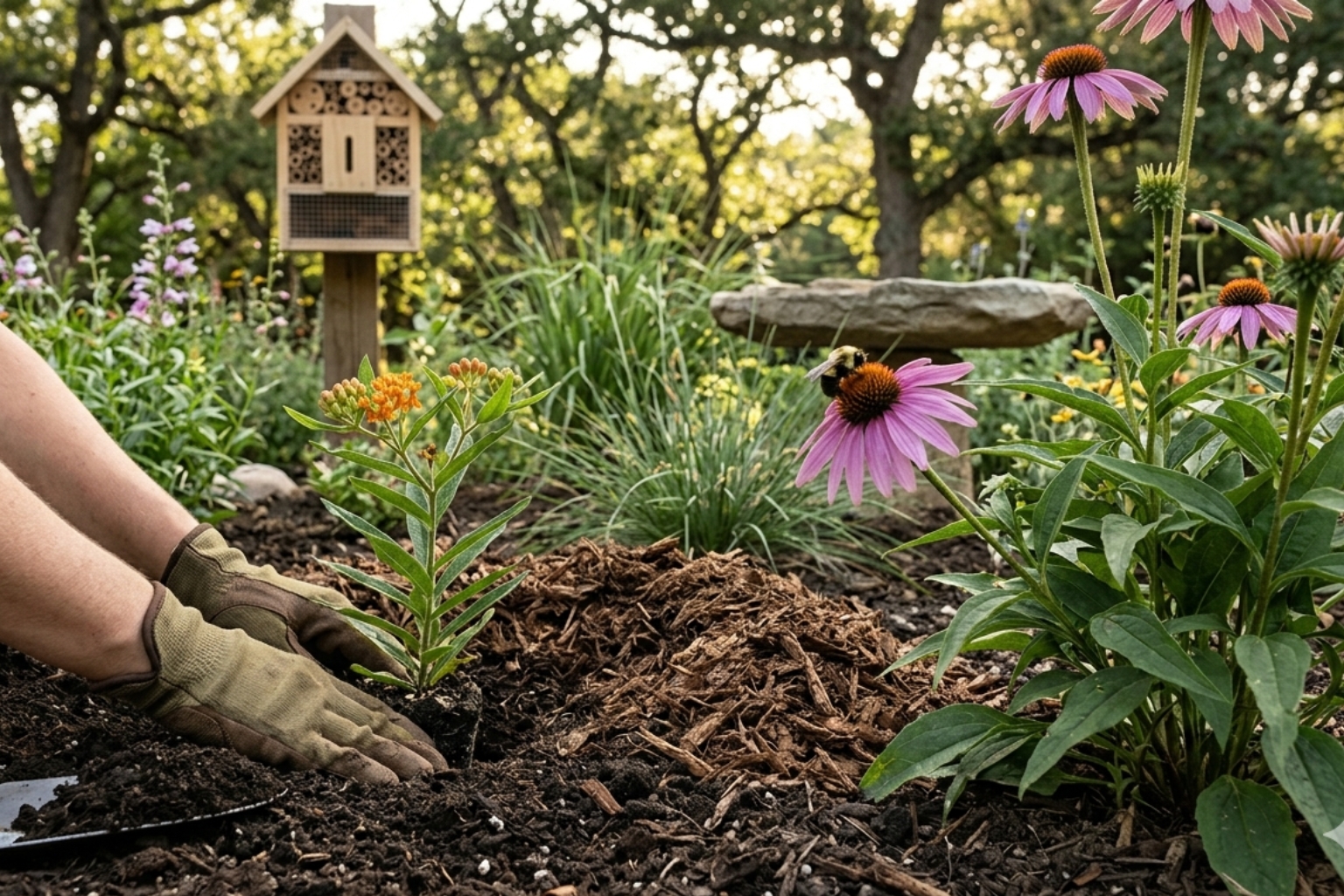
- Leaving small areas of bare soil for ground-nesting bees
- Keeping some dead stems or brush piles for overwintering insects
- Providing shallow water dishes or birdbaths with stones for resting spots
These simple additions can significantly improve habitat quality.
Avoid Pesticides
Even low levels of certain pesticides can negatively affect pollinators. Whenever possible, use organic or natural gardening methods such as:
- Companion planting
- Hand-removal of pests
- Encouraging beneficial insects like ladybugs and lacewings
Reducing chemical use creates a healthier and safer environment for pollinators and people alike.
Benefits That Extend Beyond Beauty
Boost Nearby Crop Yields
Research shows that pollinator-friendly habitats near farms and gardens can improve pollination services and may increase yields for certain crops.
Fact-check note: The original statement claiming crop yields improve “by up to 30%” varies significantly depending on crop type, location, and pollinator presence. A more general statement is more accurate.
Support Biodiversity and Ecosystem Health
Native pollinator gardens often support greater numbers of bees, butterflies, birds, and beneficial insects compared to traditional turf lawns or ornamental landscapes.
This increased biodiversity strengthens ecosystem resilience and promotes healthier local environments.
Reduce Maintenance and Conserve Resources
Once established, native plant gardens generally require less water, fertilizer, and maintenance than non-native ornamental landscapes. Their deep root systems also help reduce erosion and improve soil structure.
Fact-check note: The original “60–70% less maintenance” claim varies by region and garden design and could not be consistently verified across sources.
Foster Environmental Awareness
Pollinator gardens help people better understand the connections between plants, insects, wildlife, and food production. They become living examples of how small individual actions can positively impact the environment.
How to Start Your Pollinator Garden
- Research native pollinator-friendly plants suited to your local climate and soil conditions.
- Choose a sunny location with at least six hours of sunlight daily.
- Remove invasive species or excess turf grass before planting.
- Improve soil naturally with compost if needed.
- Plant flowers in clusters and include species with varying bloom times.
- Add habitat features such as water dishes, brush piles, or bare soil patches.
- Avoid pesticides whenever possible.
- Observe which pollinators visit your garden and adjust plant selections seasonally if needed.
Thoughts: Grow a Garden That Gives Back
Planting a pollinator garden is one of the most meaningful actions you can take to support the environment at home. These gardens help protect essential pollinators, strengthen biodiversity, and contribute to healthier ecosystems and food systems.
When native flowers bloom and bees, butterflies, and birds begin to visit regularly, your garden becomes more than just a beautiful space it becomes a thriving habitat that gives back to nature.
Create a place where pollinators can flourish, and nature will reward you with life, color, and abundance.
Resources & References
- University of Georgia Extension – Pollinator Conservation Resources
https://extension.uga.edu/publications/detail.html?number=B1494 - University of Georgia Bee Program
https://bees.caes.uga.edu - Athens-Clarke County Sustainability Office
https://www.accgov.com/sustainability - Xerces Society for Invertebrate Conservation – Pollinator Habitat Guides
https://www.xerces.org/pollinator-conservation - U.S. Department of Agriculture (USDA) – Pollinator Resources
https://www.usda.gov/pollinators - Food and Agriculture Organization of the United Nations (FAO) – Pollination and Food Production
https://www.fao.org/pollination/en/ - Intergovernmental Science-Policy Platform on Biodiversity and Ecosystem Services (IPBES) – Pollinator Assessment Report
https://ipbes.net/assessment-reports/pollinators
