


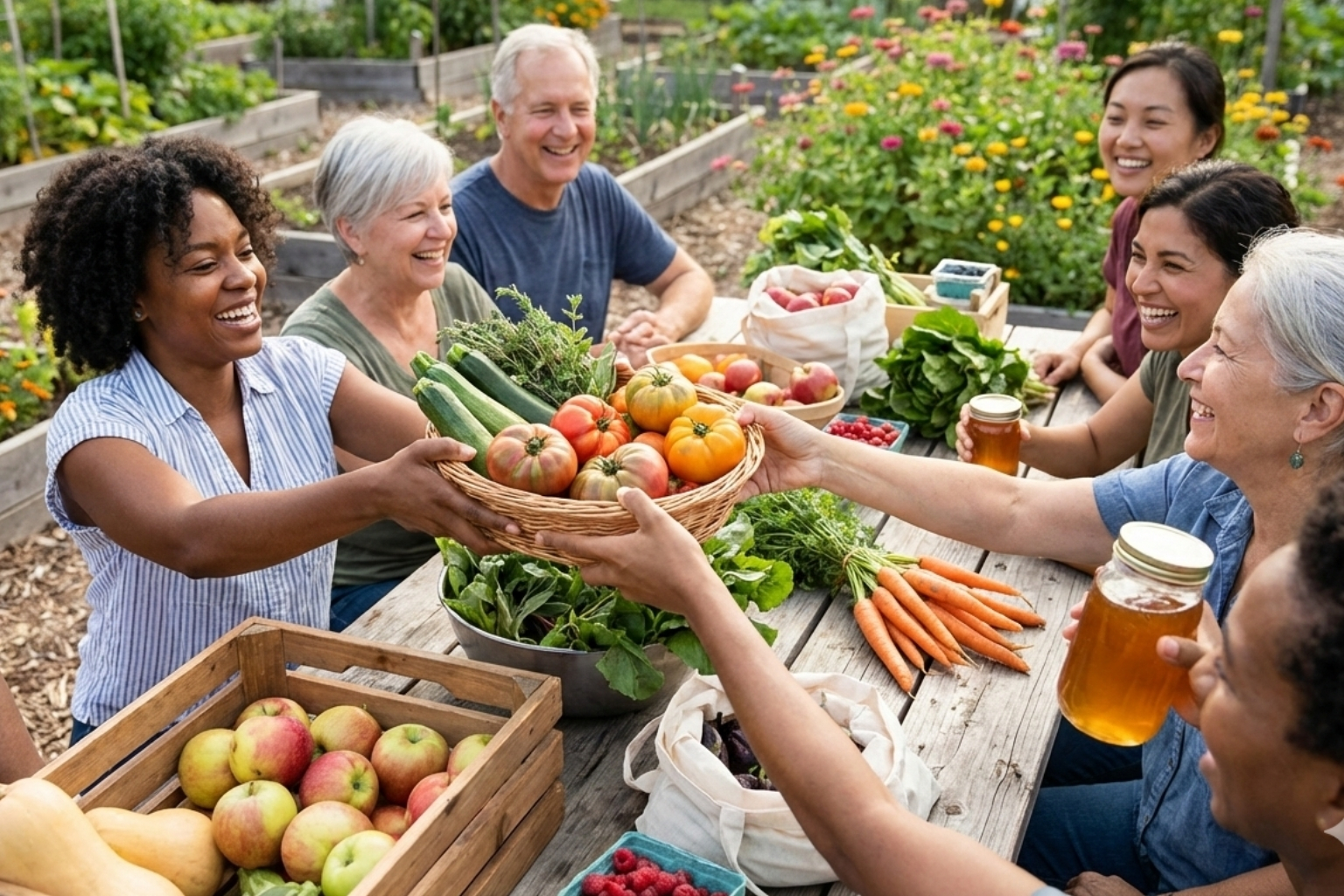
Growing your own fruits, vegetables, and herbs is empowering. But sharing your surplus harvest with neighbors, family, or friends transforms gardening into a force for community, connection, and sustainability. Swapping homegrown produce helps prevent food waste, strengthens local relationships, encourages knowledge-sharing, and supports a more resilient, low-carbon food system.
Why Swap Homegrown Produce?
Cut Food Waste at the Source
Food waste is one of today’s major environmental challenges. According to the United Nations Food and Agriculture Organization (FAO), approximately one-third of all food produced globally is lost or wasted each year.
The United Nations Environment Programme (UNEP) also reports that households are responsible for a significant share of food waste worldwide. Sharing extra produce helps reduce waste at the household level by ensuring edible food is used instead of discarded.
Reducing food waste also helps lower greenhouse gas emissions. Food loss and waste contribute an estimated 8–10% of global greenhouse gas emissions due to decomposition in landfills and the resources used to grow, transport, and package food.
Build Social Connections and Community Resilience
Sharing homegrown produce builds more than full baskets—it strengthens relationships. Exchanging fruits, vegetables, herbs, seeds, or gardening tips encourages trust, cooperation, and mutual support among neighbors and local communities.
Community-based food sharing can also improve food access and strengthen local resilience during periods of economic hardship or supply disruptions.
Learn and Diversify
Produce exchanges naturally encourage conversation and learning. Gardeners often share growing methods, recipes, preservation tips, and information about unusual crops or heirloom varieties.
You may discover new vegetables, herbs, or gardening techniques you otherwise would never have tried.
How Swapping Produce Benefits Everyone
Increased Access to Fresh Produce
Community gardening and produce-sharing programs can help increase access to fresh fruits and vegetables, especially in areas where healthy food options may be limited.
Studies have shown that people involved in gardening and community food programs often consume more fruits and vegetables than those who are not involved.
Economic Savings
Exchanging surplus produce can reduce grocery expenses, particularly during peak growing seasons. Sharing also helps prevent excess harvest from going unused while supporting households with fresh, nutritious food at little or no cost.
Improved Mental and Physical Well-Being
Gardening has been linked to reduced stress, improved mood, increased physical activity, and stronger emotional well-being. Sharing harvests can further enhance these benefits by creating opportunities for connection, generosity, and community engagement.
Environmental Benefits
Every shared basket of produce can help reduce demand for commercially packaged and transported food. This may lower transportation emissions, reduce plastic packaging waste, and support more localized food systems.
While individual impacts may be small, collective community action can contribute to broader sustainability goals.
How to Start Swapping Produce
Grow with Abundance in Mind
Plant a little extra of high-yield crops such as:
- Cherry tomatoes
- Zucchini
- Basil and other herbs
- Leafy greens
- Peppers
- Cucumbers
Planning for surplus makes sharing easier and more intentional.
Build Your Circle
Start with neighbors, friends, coworkers, or family members who enjoy fresh produce. You can also connect through:
- Local gardening clubs
- Community gardens
- Farmers markets
- Neighborhood social media groups
- Produce-sharing events
Package Produce Thoughtfully
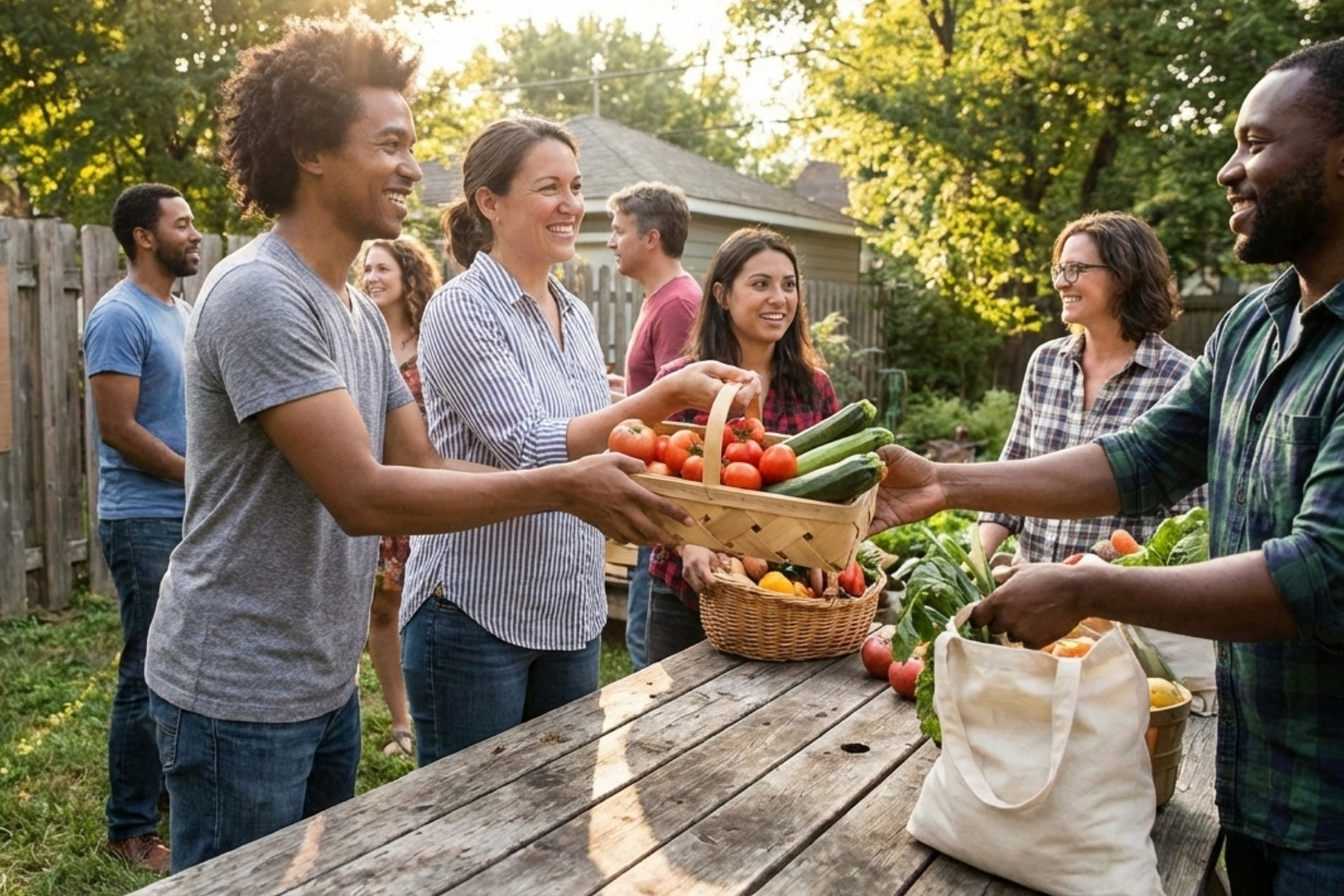
Use reusable containers, baskets, or cloth bags whenever possible. Adding labels with the harvest date, variety name, or recipe suggestions can make exchanges more helpful and enjoyable.
Share Knowledge Too
Produce swaps are also opportunities to exchange:
- Seeds
- Seedlings
- Composting tips
- Pest-control methods
- Recipes and preservation ideas
Sharing knowledge strengthens gardening skills across the community.
Host a Small Produce Swap
Consider organizing a casual neighborhood exchange where people can trade extra fruits, vegetables, herbs, jams, or seeds. Even small gatherings can help build lasting community connections.
Real-Life Impact
Across many communities, gardeners regularly exchange surplus produce informally. Neighbors share herbs, tomatoes, peppers, zucchini, citrus fruits, and homemade preserves. Some community gardens also donate excess harvests to local food pantries and community kitchens.
These simple acts help reduce waste, improve access to nutritious food, and encourage stronger local relationships.
They also create opportunities for knowledge-sharing about planting schedules, harvesting techniques, food preservation, and sustainable gardening practices.
Thoughts: Plant More, Share More, Waste Less
Swapping homegrown produce is about more than sharing food—it’s about strengthening community, supporting sustainability, and creating meaningful connections.
With even a modest garden, you can help reduce food waste, support neighbors, and contribute to healthier local food systems. Every shared tomato, zucchini, herb bundle, or pepper adds up to less waste, stronger relationships, and a more sustainable future.
So plant a little more than you need, share what you grow, and help your community thrive.
Resources & References
- United Nations Food and Agriculture Organization (FAO) – Food Loss and Food Waste
https://www.fao.org/platform-food-loss-waste/en/ - United Nations Environment Programme (UNEP) – Food Waste Index Report
https://www.unep.org/resources/report/unep-food-waste-index-report-2024 - U.S. Environmental Protection Agency (EPA) – Preventing Wasted Food at Home
https://www.epa.gov/recycle/preventing-wasted-food-home - University of Georgia Extension – Community and School Gardens
https://extension.uga.edu/topic-areas/home-garden/community-and-school-gardens.html - Athens Land Trust Community Agriculture Program
https://athenslandtrust.org/programs/community-agriculture/ - Athens-Clarke County Sustainability Office
https://www.accgov.com/sustainability - USDA People’s Garden Initiative
https://www.usda.gov/peoples-garden
