


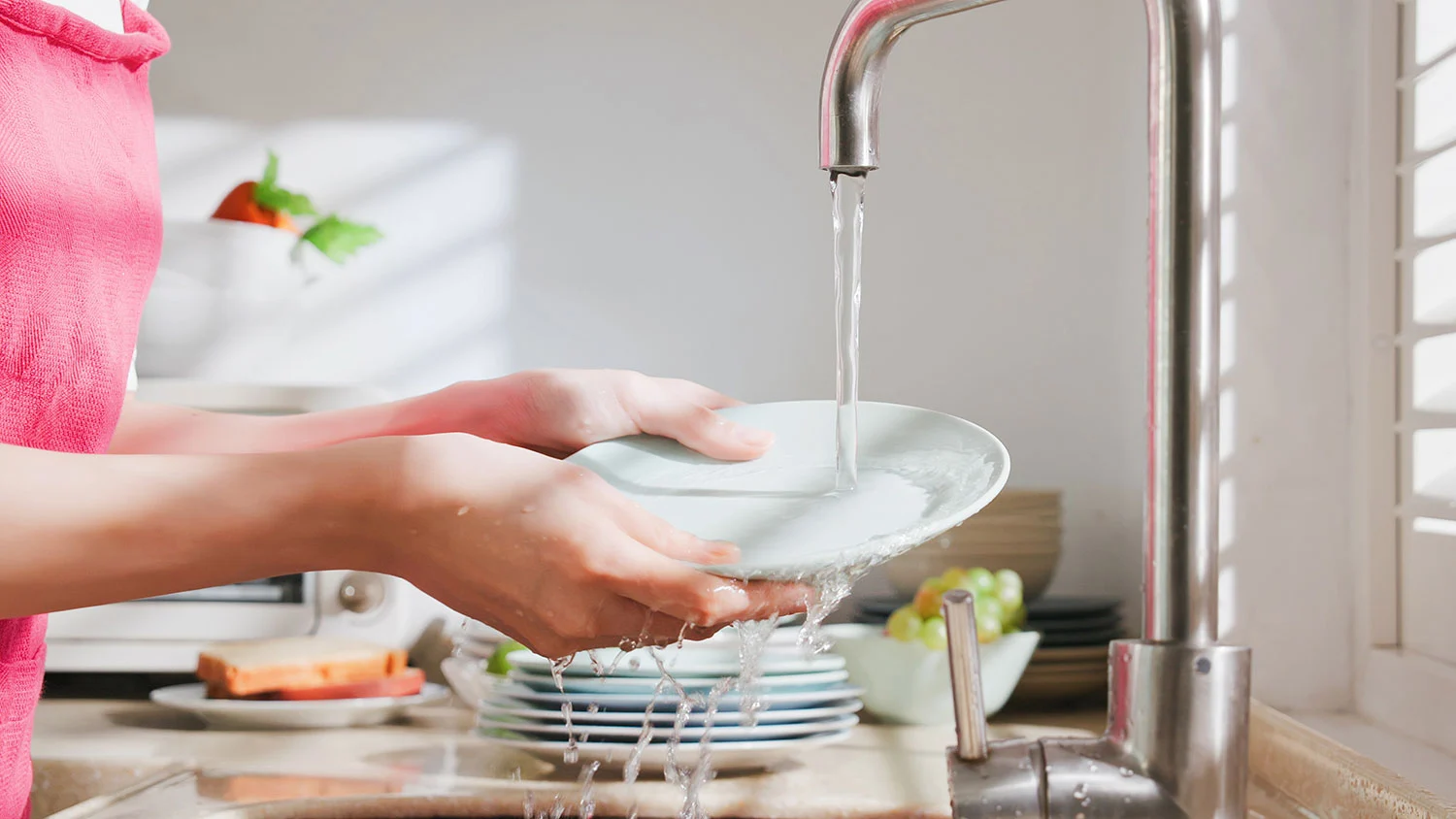
When it comes to washing dishes, many people fall into the habit of double washing, first rinsing plates and utensils by hand before placing them in the dishwasher. While it may feel like a way to ensure cleaner dishes, this common practice can actually waste a significant amount of water, energy, and time.
Modern dishwashers are engineered to handle dishes with food residue. In most cases, that extra pre-rinse step is unnecessary and less efficient than simply scraping and loading.
In this blog, we’ll explore why double washing your dishes isn’t helpful, how skipping the pre-rinse can make a difference, and practical tips to still get sparkling clean results while conserving resources.
Why Do People Double Wash Their Dishes?
Pre-rinsing dishes is a long-standing habit in many households. People often believe it helps:
- Prevent food residue from clogging the dishwasher
- Ensure dishes come out cleaner
- Avoid odors or mold buildup in the machine
- Prevent detergent from being “wasted” on food particles
While these concerns are understandable, they are largely based on older dishwasher technology. Modern machines and detergents are designed to handle food soil directly.
How Modern Dishwashers Handle Dirty Dishes
Today’s dishwashers are significantly more efficient and powerful than older models. Key features include:
- Built-in filters and strainers: Capture food particles and reduce clogging
- High-pressure spray arms: Distribute water to remove stuck-on food
- Pre-wash or soak cycles: Help loosen dried or stubborn residue
- Advanced detergents: Enzymatic formulas break down grease and food particles effectively
Because of these improvements, most everyday dishes do not require pre-rinsing—only basic scraping is needed.
How Double Washing Wastes Water and Energy
💧 Water Waste
Research from the U.S. Environmental Protection Agency (EPA) and ENERGY STAR shows that modern dishwashers use significantly less water than hand washing, especially when used correctly without pre-rinsing.
Pre-rinsing under running water can use several gallons per minute, meaning a few minutes at the sink can add unnecessary water use per load.
⚡ Energy Waste
Hot water used during rinsing requires energy to heat. This adds to household energy consumption and increases carbon emissions, especially if electricity or gas is fossil-fuel based.
⏱️ Time and Effort
- Extra rinsing adds unnecessary time at the sink
- Scraping instead of rinsing is significantly faster and easier
- Eliminating pre-rinsing simplifies the entire dishwashing routine
Environmental and Financial Benefits
Reducing unnecessary pre-rinsing can lead to:
- Lower water bills from reduced tap usage
- Lower energy bills from less hot water consumption
- Reduced environmental impact through lower household water and energy demand
- More efficient appliance use, which helps dishwashers operate as designed
Tips for Loading Your Dishwasher Without Pre-Rinsing
1. Scrape, Don’t Rinse
Remove large food scraps into the trash or compost instead of rinsing under water.
2. Load Properly
Ensure dishes are spaced so water jets can reach all surfaces.
3. Use Quality Detergent
Modern enzymatic detergents work best when they can attach to food particles.
4. Run Full Loads
Dishwashers are most efficient when fully loaded.
5. Choose the Right Cycle
Use eco or normal cycles for everyday dishes; heavier cycles for pots and pans.
6. Maintain Your Dishwasher
Regularly clean filters and spray arms to maintain performance.
When Is Pre-Rinsing Actually Necessary?
Pre-rinsing is generally not needed, but there are exceptions:
- Extremely burnt or dried-on food may benefit from a short soak
- Older dishwashers with limited spray power may perform better with light pre-rinsing
- Baby bottles or medical items should follow manufacturer cleaning instructions
Hand Washing vs. Dishwasher: Which Is Greener?
Studies consistently show that modern dishwashers are typically more water- and energy-efficient than hand washing, especially when fully loaded and used properly.
- Hand washing with running water can use significantly more water per load
- Basin or sink washing is more efficient but still often uses more water than a modern dishwasher
- Dishwashers optimize water use through controlled spray systems
Final Thoughts: Save Resources Without Sacrificing Clean Dishes
Skipping the pre-rinse is a small habit change that can make your dishwashing routine more efficient. By simply scraping dishes instead of rinsing them, you reduce unnecessary water and energy use while still getting clean results.
Modern dishwashers are designed for convenience and efficiency—trusting them to do their job helps save resources, lower utility costs, and reduce environmental impact.
Want to Reduce Water Use Even More?
- Use eco-friendly detergents
- Run only full loads
- Maintain your dishwasher regularly
- Scrape instead of rinse
Resources & References
- U.S. Environmental Protection Agency (EPA) – WaterSense: Using Water Efficiently
https://www.epa.gov/watersense - ENERGY STAR – Dishwashers and Energy Savings
https://www.energystar.gov/products/appliances/dishwashers - U.S. Department of Energy – Dishwashers and Energy Use
https://www.energy.gov/energysaver/dishwashers - Natural Resources Defense Council (NRDC) – Water Efficiency in Homes
https://www.nrdc.org/issues/water - Consumer Reports – Dishwasher Efficiency and Usage Guidance
https://www.consumerreports.org/cro/dishwashers.htm
